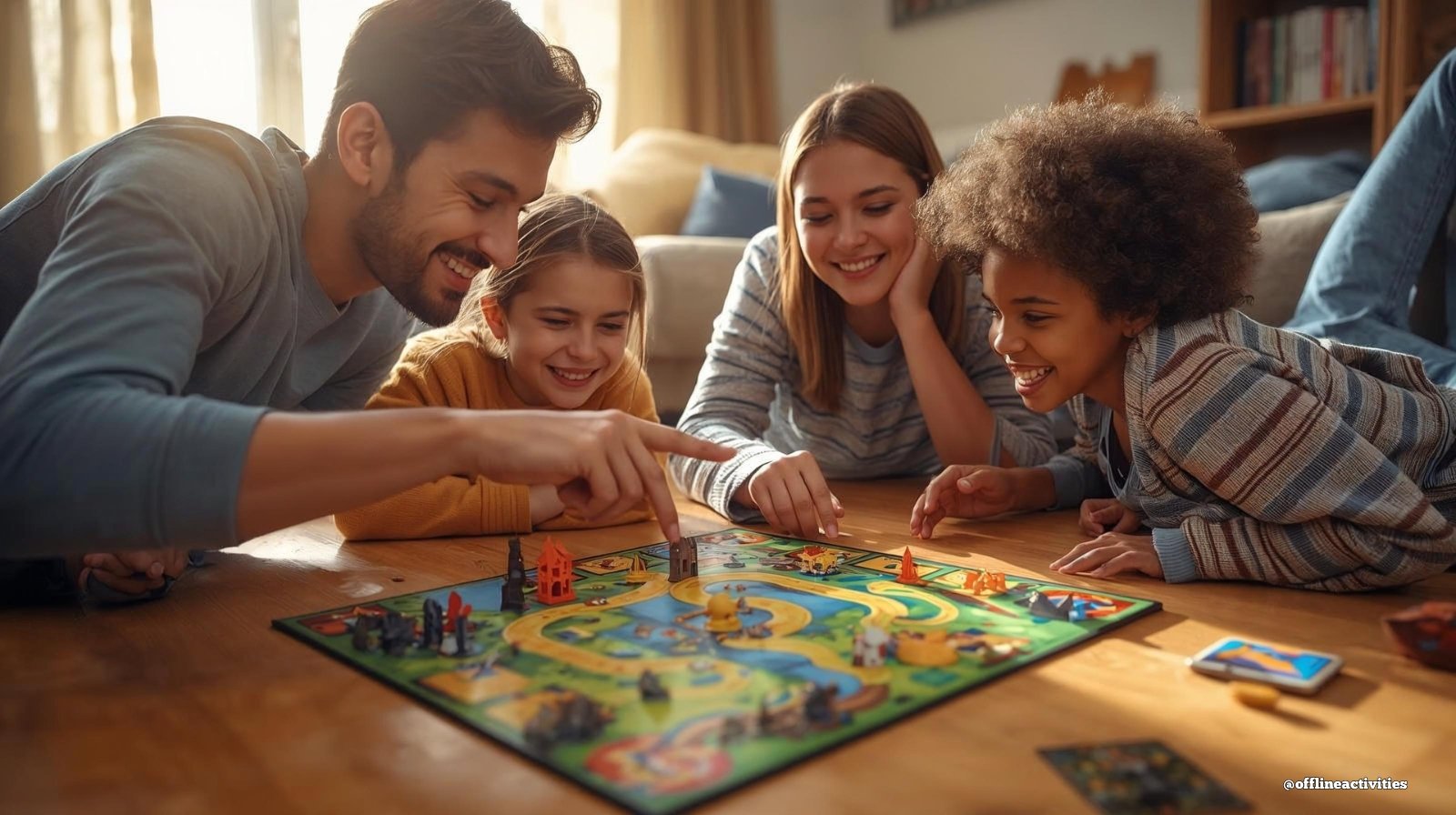
Every parent and teacher knows that magical moment when a child’s imagination takes flight. Perhaps a cardboard box becomes a castle, or a simple game transforms into an epic adventure. In our structured world, however, creating consistent opportunities for this kind of creative thinking can feel challenging. This is where the humble board game reveals its secret power. Far more than just family entertainment, board games for children serve as a dynamic, screen-free toolkit. They nurture creativity, strategic thinking, and collaborative problem-solving in a uniquely engaging way. Let’s explore how the right games can become a springboard for your child’s imagination.
Why Board Games Are a Creativity Powerhouse
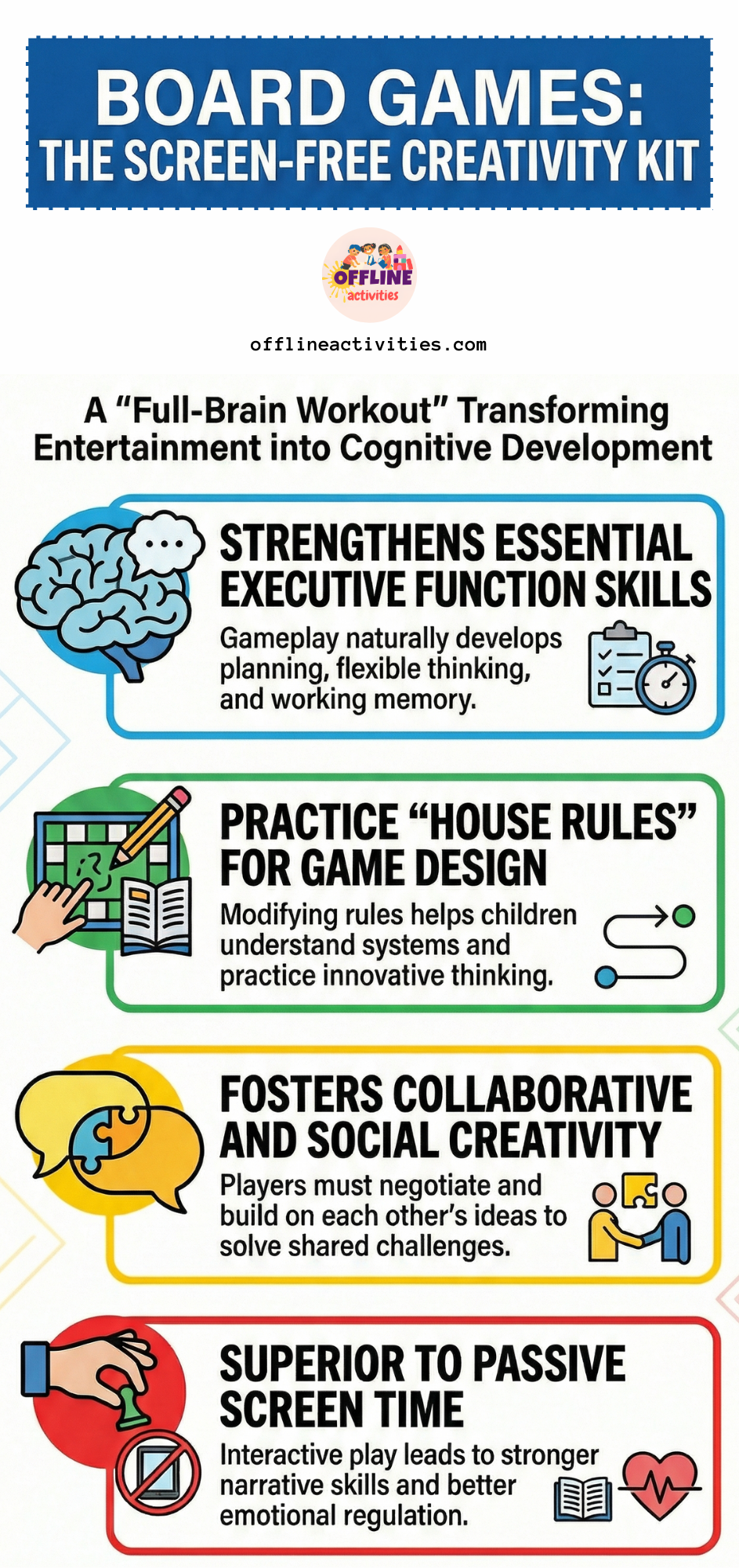
Board games operate on a beautiful paradox. They provide just enough structure to give children a safe framework, yet they also leave ample room for imaginative exploration. This balance is precisely where creativity thrives. Unlike passive screen time, board games demand active participation and decision-making. Consequently, young minds must engage, adapt, and invent throughout play.
The benefits are multi-layered. First, games naturally develop executive function skills like planning, flexible thinking, and working memory. Importantly, all of these skills are essential for creative problem-solving. Next, the social interaction inherent in game play fosters collaborative creativity. During a game, children negotiate, share ideas, and build on each other’s thoughts. Furthermore, the tactile nature of rolling dice and moving pieces provides kinesthetic learning. This connection of physical action to cognitive processes deepens engagement. Research in play-based learning consistently shows that children who engage in complex, rule-based play demonstrate stronger narrative skills and a greater capacity for innovative thinking.
How to Choose the Right Games for Creative Play
Selecting games that encourage creativity is simpler than you might think. You don’t need a closet full of games; instead, a few versatile types will do. Focus on games that encourage open-ended thinking and interaction.
Look for These Key Types:
-
Open-Ended Strategy Games: Titles like Blokus or Catan Junior encourage players to devise unique plans and adapt to changing conditions.
-
Storytelling Games: Options like Rory’s Story Cubes or Tell Tale provide prompts that spark narrative invention and character creation.
-
Cooperative Games: Games such as Hoot Owl Hoot! or Forbidden Island require players to work as a team, brainstorming solutions together against a common challenge.
For younger children, prioritize games with simple rules and short playtimes. This approach allows the focus to remain on imaginative play rather than on remembering complex instructions.
A Guide to Facilitating Creative Game Sessions
Transforming game night into a creativity incubator is about your approach. Your role is that of a game master and curiosity guide, not just a rule enforcer.
Setting the Stage for Imagination:
Before starting, set a creative tone. You might say, “Let’s see what kind of story we can tell with this game!” During play, use open-ended questions to prompt deeper thinking. In a strategy game, ask, “What’s your wild idea for winning this turn?” In a storytelling game, prompt with, “What happens next in this surprising adventure?”
Most importantly, be flexible with the rules, especially with children under 7. “House rules” are not cheating; they’re creative game design in action! If a child wants to add a new way to earn points or invent a special power for their game piece, embrace it. This act of modification is the heart of creative thinking.
Adapting Play for Different Ages and Stages
To maximize both fun and learning, tailor the experience to your child’s developmental level.
-
For Ages 3-5 (Pre-K): Focus on games with strong narratives and physical components. Simplify rules dramatically. At this stage, the goal is imaginative engagement, not competition. For example, a matching game can become a hunt for magical pairs in a fairy-tale forest.
-
For Ages 6-8 (Early Elementary): Introduce games with light strategy. This is the perfect age to start co-creating house rules. After playing a game like Ticket to Ride First Journey by the book once, ask, “What if we could build bridges over the oceans? How would that change our game?”
-
For Mixed-Age Groups: Choose cooperative games where players work together against the game itself. This removes competitive pressure and allows older children to mentor younger ones in creative strategy, fostering a supportive environment.
Simple Extensions to Boost Creative Thinking
The creativity sparked during a game doesn’t have to end when the box is closed. Try these easy activities to extend the learning and fun.
-
The “Design a Sequel” Challenge: After playing, ask your child to design a new game board or invent a new challenge card using paper and crayons.
-
Story Spin-Offs: Use the game’s theme as a story starter. If you just played a dinosaur game, encourage your child to draw a comic strip about the dinosaurs’ next adventure.
-
Create a Props Box: Keep a box of fabric scraps, pipe cleaners, and clay near your game shelf. Children can then create custom game pieces or scenery to enhance their next play session.
The Educational Foundations of Playful Learning
In my years of designing learning experiences, I’ve seen how a board game can reveal a child’s thinking process. I recall one quiet student who became a brilliant, vocal strategist during a game of Robot Turtles. He was carefully debugging his sequence of commands—a direct exercise in computational thinking disguised as play.
From a cognitive perspective, board games are a full-brain workout. They engage the prefrontal cortex for planning, the temporal lobe for memory, and the social brain network for understanding others. This integrated activity is why play is so effective for learning.
This approach is deeply rooted in constructivist theory, which posits that children build knowledge through interaction. It also aligns with philosophies that recognize children express ideas through play and collaboration, not just words. Therefore, parents can trust this form of play is a safe, proven, and enriching way to support holistic growth.
Nurturing Creativity: Structured Game vs. Open-Ended Play
| Creative Skill | Board Game with Flexible Rules | Completely Unstructured Free Play |
|---|---|---|
| Problem-Solving Framework | Provides a specific challenge to overcome, teaching innovation within constraints. | Offers limitless possibilities, which can sometimes overwhelm or lack direction. |
| Social Creativity | Encourages negotiation and collaborative strategy in a shared mission. | Can be solitary or lead to parallel play with less need for compromise. |
| Strategic Thinking | Develops planning and adaptive thinking as players react to the game. | May not inherently encourage long-term planning or systematic thinking. |
| Narrative Development | Provides a thematic jumping-off point for story, requiring imagination to fill in details. | The narrative is entirely child-generated, fostering pure originality. |
| Understanding Systems | Makes rules and outcomes concrete, teaching kids they can understand and modify systems. | Less focused on the mechanics of how things work. |
Frequently Asked Questions
Aren’t board games about winning and losing? Doesn’t that stifle creativity?
While competition can be part of the fun, it doesn’t have to be the focus. The creative potential lies in the process—the strategies devised and the problems solved along the way. Emphasizing this journey over the end result keeps the experience positive and creative.
My child just wants to play the same game over and over. Is that still beneficial?
Absolutely! Repetition is a cornerstone of childhood learning. With each play, they master the rules. This mastery then frees up mental energy to get more creative, allowing them to experiment with new strategies or imagine richer backstories.
What if my child gets frustrated and doesn’t want to follow any rules?
This is common, especially with younger children. It’s often a sign to simplify. Reduce the number of rules, play cooperatively so you can guide them, or even abandon the official rules for that session. Ultimately, the goal is joyful engagement.
Are there specific games you recommend for nurturing creativity?
Look for games that are more about the process than the product. Cooperative games, storytelling games, building games, and strategy games with multiple paths to victory all prioritize imaginative thinking over simple luck.
How do I balance board games with other creative activities?
Think of them as complementary tools. A board game can inspire a drawing, and a building project can become a game. The key is seeing the connections between different types of play.
Can board games really help my child in school?
Definitely. The skills practiced during game play—turn-taking, focus, strategic planning, and creative problem-solving—are directly transferable to the classroom. They build the social and cognitive readiness that teachers value.
Play as the Pathway to Imagination
In the end, a board game is simply a box of possibilities. It’s a shared space where a child can test ideas, take on roles, and triumph creatively. This playful practice in innovation is not just preparation for the future; it is the vibrant, joyful work of childhood itself. By choosing to sit down at the game table, you give your child a powerful message: their ideas matter and their imagination is welcome.