These puzzles are great for kids of all ages and can be played by yourself or with a group. Best of all, they’re free!
Just download and print any of our word search puzzles and you’re ready to play. Whether you’re looking for an easy way to keep the kids entertained on a rainy day or you want to challenge your friends and family to a fun game, these puzzles are perfect. Give them a try today!
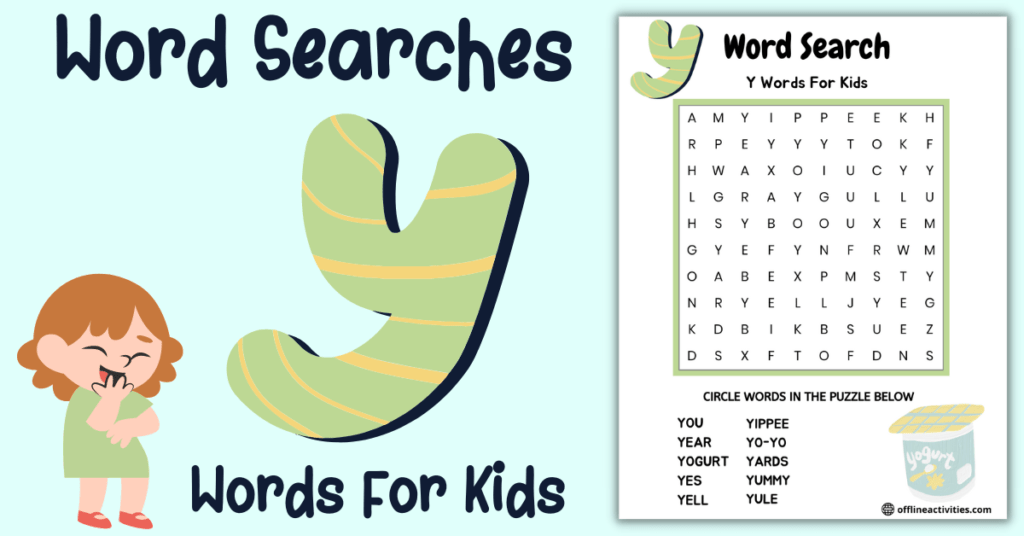
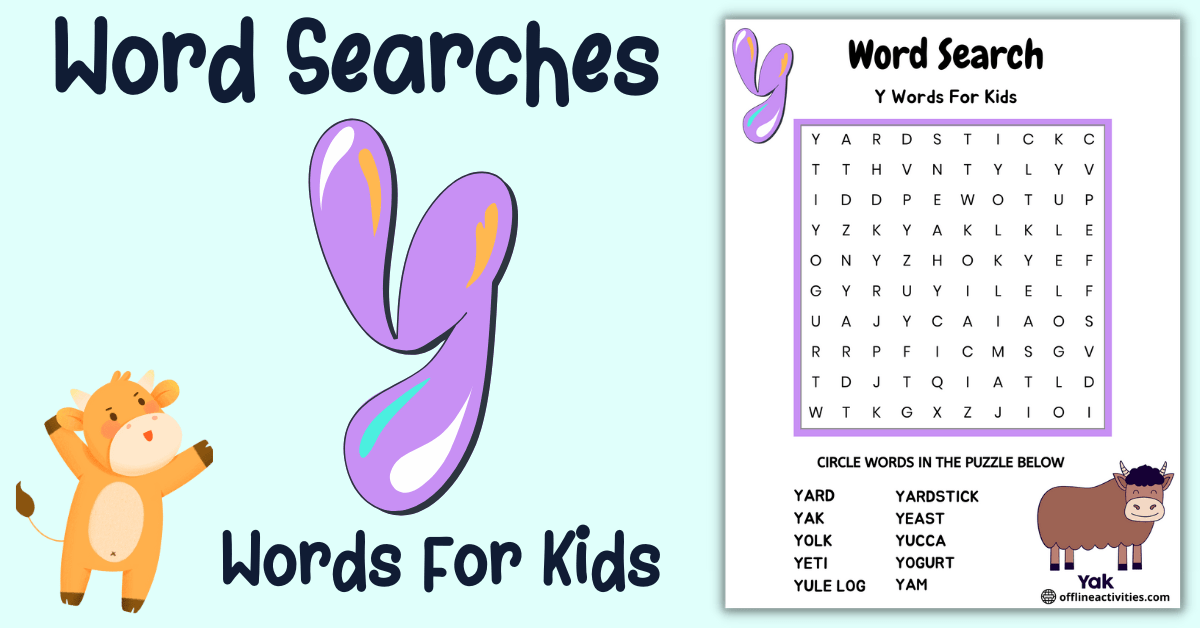
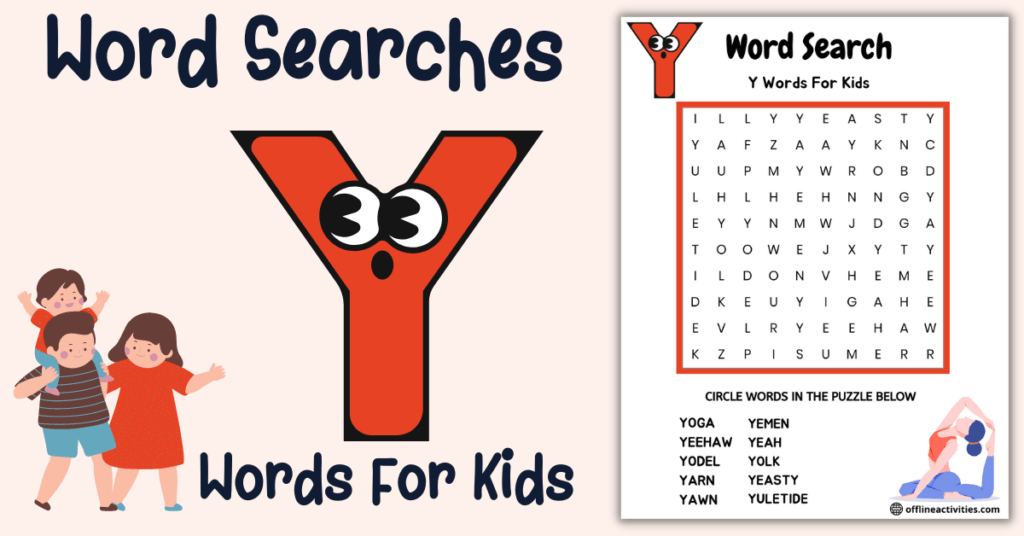
The words in this puzzle all start with the letter “Y”.
In today’s digital world, it’s a common parental worry: our children’s attention seems constantly pulled toward flickering screens, leaving us concerned about their focus, creativity, and even the quality of our family time. We feel the tug-of-war between the convenience of digital devices and our instinct to provide a richer, more hands-on childhood. But what if the solution isn’t a strict rule, but a joyful invitation? This guide is your hopeful blueprint for replacing screen time with connection time. We’ll explore easy, engaging screen-free activities for kids that promise not just less friction, but more laughter, learning, and cherished memories for your entire family.
Why Screen-Free Time Matters: A Quick Take
Before we dive into the activities, let’s remember the why. Replacing passive screen consumption with active offline play ideas offers profound benefits:
-
Strengthens Focus & Imagination: Unstructured play without instant digital rewards builds concentration and fosters original thought.
-
Deepens Family Bonding: Shared activities create inside jokes, teamwork, and conversations that simply don’t happen when everyone is facing separate screens.
-
Improves Emotional Regulation: Real-world play allows kids to experience and process boredom, frustration, and triumph in a healthy, manageable way.
-
Promotes Healthier Habits: It naturally encourages more movement, better sleep hygiene, and reduces the risk of digital eye strain.

Print Puzzle
Creative Indoor Play Ideas (Arts, Crafts & Storytelling)
When the weather turns or you need a quiet afternoon, your living room can transform into a creativity lab. These activities build fine motor skills, problem-solving abilities, and narrative thinking.
Themed Word Hunt Adventure
Turn a simple puzzle into a multi-sensory exploration. Start with our Search The Word Puzzle – Letter Y (a perfect free printable from OfflineActivities.com). But don’t stop at just finding the words—use them as a launchpad!
-
Step-by-Step Guide:
-
Print & Hunt: Download and print the puzzle. Set a fun timer for 5 minutes and hunt for the 10 ‘Y’ words together.
-
Act It Out: Once you find a word like “Yak” or “Yeti,” challenge your child to act it out. Can they walk like a yak? Roar like a yeti?
-
Story Spark: Use three words from the puzzle (e.g., Yeti, Yogurt, Yard) to invent a silly oral story together, taking turns adding one sentence each.
-
Art Extension: Draw a scene that includes a “Yucca” plant in a “Yard” next to a “Yule log.”
-
-
Educational Value: This builds vocabulary, letter recognition, gross motor skills, and narrative sequencing. For younger children (3-5), focus on finding and sounding out the first letter. For older kids (6-8), they can write their invented story down.
-
Teacher Insight: “I use themed word searches as ‘story starters’ in my first-grade classroom,” says Ms. Alvarez, a 10-year veteran teacher. “It’s incredible how one puzzle can lead to a 20-minute creative writing session full of giggles and impressive vocabulary use.”
What could your family discover if you replaced one screen-based game with a word-based adventure this week?
Sensory & Craft Stations
Set up simple, rotating stations with items from your recycling bin and craft drawer. A “Texture Station” with cotton balls (yarn!), dry beans, and smooth stones invites mindful touch and descriptive language.
Outdoor Adventures for Young Learners
Nature is the ultimate, ever-changing play space. Educational outdoor games build physical coordination, scientific curiosity, and respect for the environment.
Backyard Alphabet Expedition
Take literacy outside! This is a dynamic version of the indoor word hunt.
-
Step-by-Step Guide:
-
Choose Your Letter: Start with ‘Y’. Give your child a clipboard, paper, and a crayon.
-
Hunt & Document: Explore your yard or local park. Can they find something Yellow? Can they draw a Y-shaped twig? If you have space, they can use their body to make the letter Y.
-
Sound Scavenger Hunt: Listen for sounds that might have a ‘Y’ in them (e.g., *y*ipping dog, *y*elling kids).
-
Adapt for Age: Toddlers can simply focus on one item (find a yellow leaf). School-age kids can create a full “Nature ‘Y’ List” with words and sketches.
-
-
Educational Value: Connects phonics to the real world, encourages observational skills, and promotes physical activity. It’s grounded in the Montessori principle of “cosmic education,” linking discrete skills (letters) to the interconnected world.
Research shows children under 8 spend over 3 hours daily on screens (Common Sense Media, 2023). Just 20 minutes of outdoor play can significantly improve attention and mood.
Family Connection Moments (Beyond the Screens)
The heart of family bonding without screens lies in predictable, joyful rituals that everyone looks forward to.
Game Night & Reading Rituals
Designate one night a week as “Analog Game Night.” Dust off board games, card games, or even create your own charades using words from your weekly theme (hello, “yak” and “yeti”!). Pair this with a pre-bedtime family reading ritual—taking turns reading pages aloud from a captivating chapter book builds listening skills and a shared cultural world in your home.
| Activity Type | Core Benefits | Screen Use Level | Parental Involvement |
|---|---|---|---|
| Digital Games/Shows | Passive Entertainment, Some Problem-Solving | High | Low to Moderate |
| Screen-Free Play & Games | Active Cognitive + Emotional Growth, Physical Movement, Social Bonding | None | Active & Engaging |
Quiet Time Activities for Calm & Focus
Not all offline play ideas need to be loud and energetic. Quiet time is essential for processing and recharging.
Puzzles & Journaling
Keep a basket of jigsaw puzzles, tangrams, and coloring pages accessible. For older kids, introduce a “Wonder Journal.” After an outdoor expedition, they can draw or write about what they saw. “I wonder why that leaf is yellow?” is the start of a scientific inquiry. This practice, supported by Harvard’s Center on the Developing Child, helps children build executive function skills like planning and reflection.
Weekend Family or Classroom Challenges
Tackle a bigger project together. This could be building a “fort” from blankets for a weekend reading camp, starting a small container garden (yam, anyone?), or creating a family mural on a large piece of cardboard.
-
The ‘Y’ Project Challenge: Using items found or recycled, can your family build a model of a yard with a yucca plant and a yak figurine? Use a yardstick to measure!
What new hobby might your family discover when you collaborate on a hands-on project?
Frequently Asked Questions (FAQ)
Q: How can I reduce my child’s screen time gently, without a battle?
A: Focus on “crowding out” rather than cutting off. Introduce a fun, new screen-free activity before they typically ask for a device. “Hey, I printed out a cool Yeti puzzle for us to try before we decide what to do next!” is more inviting than a sudden “no screens.”
Q: What are good alternatives to TV after school?
A: Create a “Wind-Down Box” with rotating options: audiobooks while coloring, a simple craft kit, or outdoor time like the Backyard Alphabet Expedition. The key is having the materials ready when energy and willpower are low.
Q: Can screen-free play really improve my child’s focus?
A: Absolutely. Studies consistently show that activities requiring sustained attention—like puzzles, building, or detailed crafts—strengthen the brain’s attention networks. The American Academy of Pediatrics emphasizes that unstructured play is fundamental for developing cognitive skills.
Q: How much daily screen time is healthy for kids?
A: The AAP recommends avoiding screens (except video-chatting) for children under 18-24 months. For ages 2-5, limit to 1 hour per day of high-quality programming. For older children, consistent limits are crucial to ensure screens don’t displace sleep, physical activity, and face-to-face interaction.
Q: What offline activities build the most family connection?
A: Activities with shared goals and laughter: cooperative board games, cooking a meal together, family projects (like building that fort), or simply going for a walk with no agenda. It’s about being jointly engaged in the same real-world moment.
Conclusion: Your Journey to a More Connected Family
Embracing screen-free activities for kids isn’t about deprivation; it’s about making room for the rich, messy, and beautiful experiences that fuel childhood development and family joy. Every puzzle solved, every story invented, every backyard discovery is a brick in the foundation of your child’s imagination, resilience, and your family’s unique bond.
Every screen-free moment gives your child space to grow, imagine, and connect.
MORE PUZZLES FOR YOU:
Puzzle Find The Words-Y Words for Kids
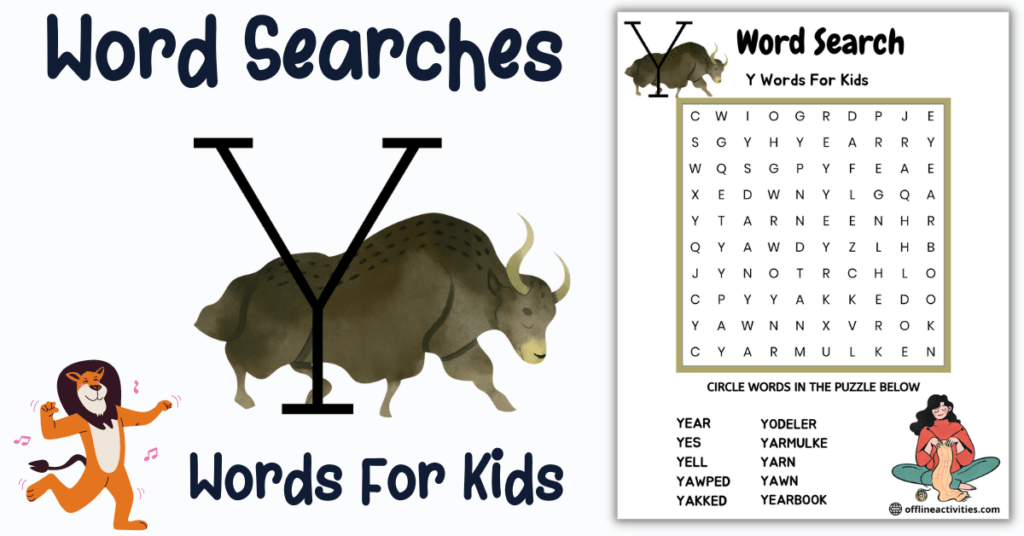
Words That Start With Y
Word Search for Kindergarteners