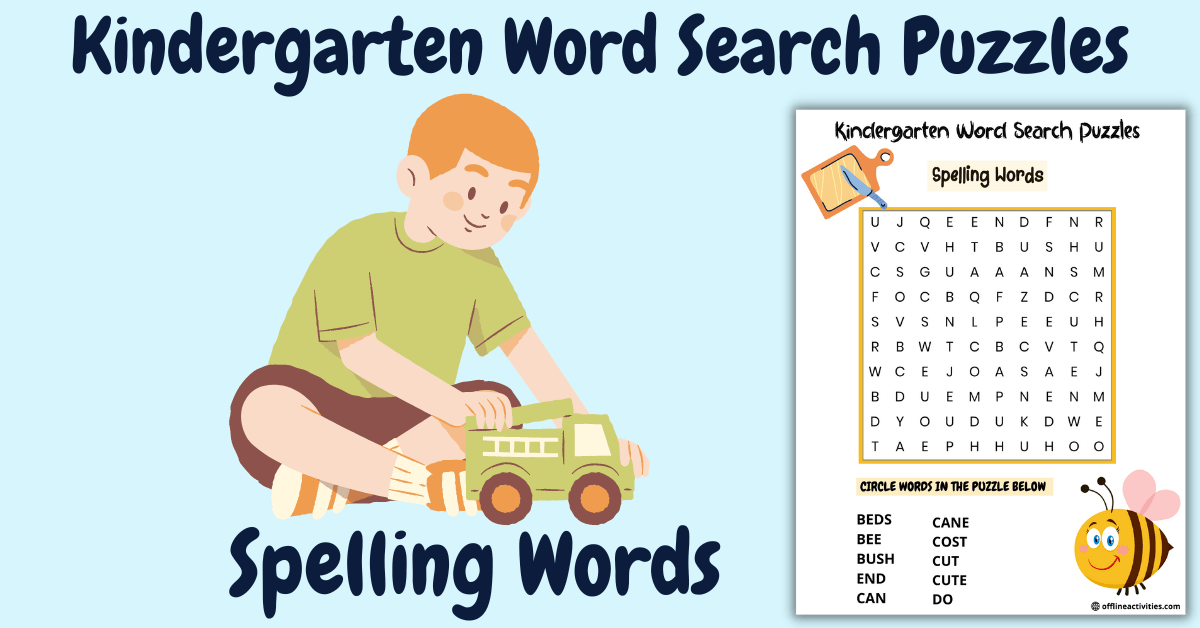
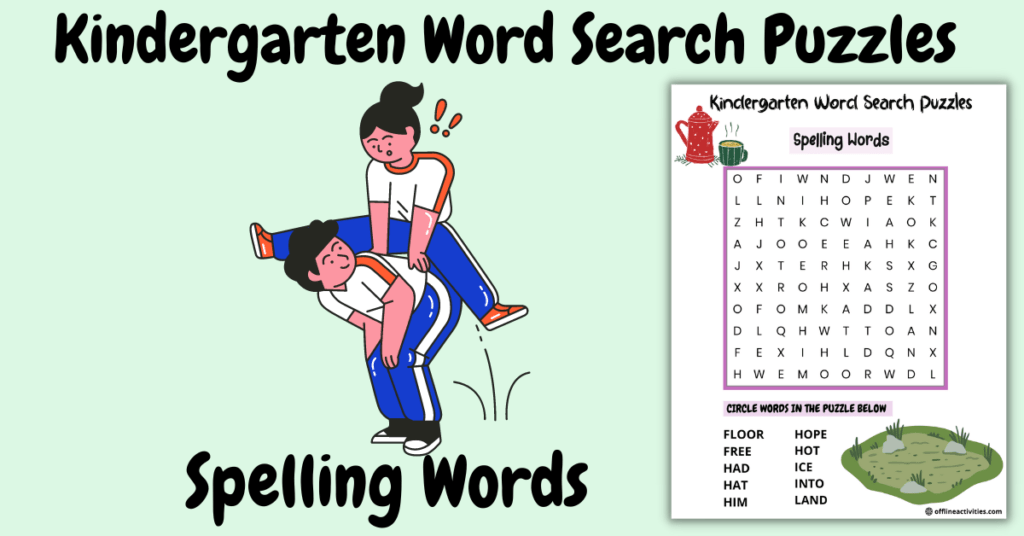
Printable Puzzle – Spelling Words

Spread the love

Many parents want to support their child’s spelling at home but are unsure how to do it without turning learning into a daily struggle. After a long school day, sitting a young child down with traditional spelling drills can quickly lead to frustration or boredom. That is where printable word search puzzles can make a real difference. This activity turns spelling practice into a calm, playful moment while still reinforcing important literacy skills. In this article, you will discover how a kindergarten word search puzzle can support spelling development, how to use it effectively at home, and why it works so well for young learners.

Why This Activity Works
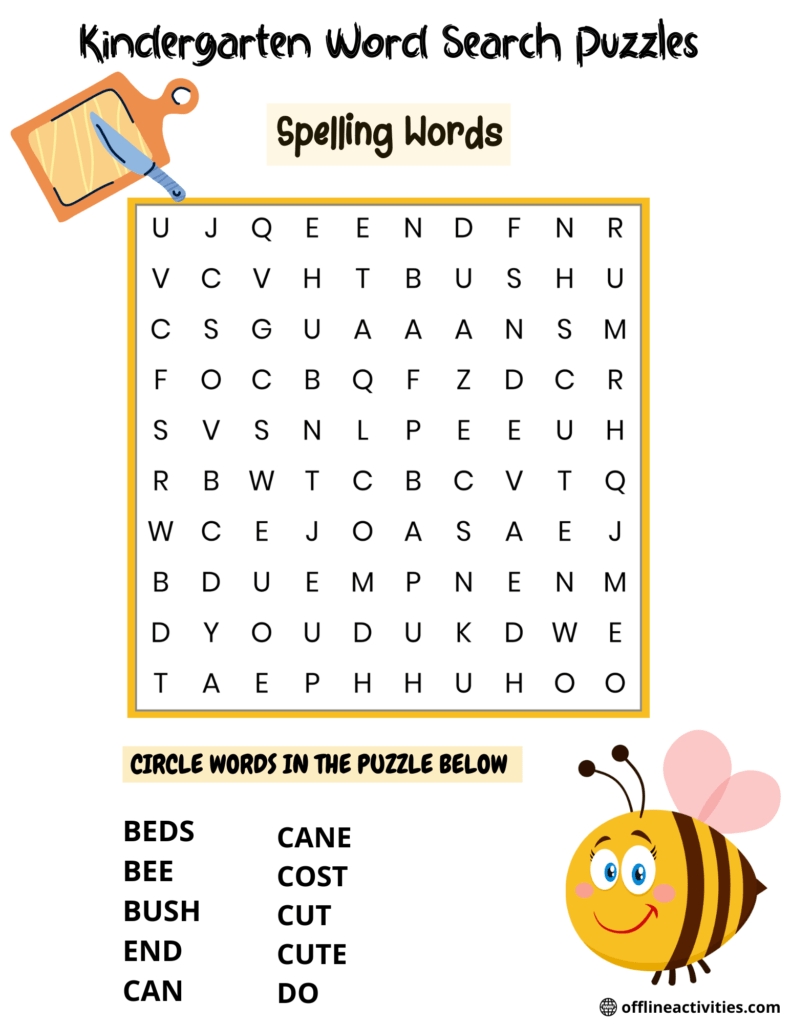
Word search puzzles are powerful because they combine several learning skills into one simple task. When children look for spelling words like BEE, BUSH, or CUTE, they practice focus and visual attention. They learn to scan carefully, moving their eyes across rows and columns, which directly supports early reading skills.

Language development is strengthened through repeated exposure. Seeing spelling words multiple times helps children recognize letter patterns and remember word shapes. This is especially helpful for words such as CAN and CANE, where only one letter changes the meaning. As children notice these differences, they build stronger word awareness.

Problem-solving also plays a role. Children must decide where to search next and how to approach the puzzle when a word feels tricky. Meanwhile, fine motor skills develop as they circle or trace words using a pencil or crayon. These small hand movements are important preparation for writing.

Screen-free activities like this one are especially valuable for kindergarten-aged children. Educational research consistently shows that hands-on paper activities support longer attention spans and deeper learning. By removing screens, children can focus fully on the task in front of them without unnecessary distractions.
Print Puzzle

How to Use the Activity
Begin by downloading and printing the word search puzzle on clean, easy-to-read paper. Before your child starts searching, take a moment to review the list of spelling words together. Reading them aloud builds confidence and helps connect spoken language with printed letters.

Guide your child gently as they work. Encourage them to look for the first letter of each word and follow the letters step by step. If they feel stuck, offer hints instead of answers. For example, you might say, “This word starts with C and ends with T. Let’s look for those letters.”

You can adapt the activity to match your child’s level. Younger or less confident learners may focus on finding five words instead of all ten. More advanced children can search for every word and then read them aloud once finished.

To extend learning, invite your child to use each word in a short sentence. Another fun idea is to ask them to group words that look similar, such as CUT and CUTE. These simple extensions deepen understanding without adding pressure.

Educational Foundations 
This activity reflects real experience from both classrooms and homes. Teachers often use word search puzzles during literacy centers because children can work independently while staying engaged. Parents appreciate them as quiet, purposeful activities that fit easily into home routines.

From an expertise perspective, word search puzzles support cognitive skills such as visual discrimination, memory, and phonics awareness. Children learn how letters work together to form words, which strengthens both spelling and reading.

The approach aligns with Montessori and active learning principles by encouraging exploration and self-correction. Children are actively involved in discovering words rather than passively receiving information. Kinesthetic learning is also present as children physically interact with the worksheet.

Trustworthiness is key. This printable puzzle is safe, age-appropriate, and completely screen-free. It focuses on meaningful learning rather than entertainment, supporting healthy habits and steady progress.

Comparison Table
Word Search Puzzles vs Screen Games

Word Search Puzzles
Encourage calm focus
Build spelling and reading skills
Support independent learning

Screen Games
Often overstimulating
May distract from learning goals
Require adult monitoring

FAQ Section

What age is this puzzle designed for?
This activity is ideal for kindergarten children, usually ages 4 to 6. It can also support early first graders who need extra spelling practice.

Can this be used in a classroom setting?
Yes, teachers can use this puzzle during literacy centers, morning work, or small-group instruction. It works well for independent or paired learning.

Is this suitable for ESL learners?
Absolutely. Visual word recognition helps ESL learners connect spelling with meaning and pronunciation.

How long does the activity take?
Most children complete the puzzle in about 10 to 15 minutes. The time can be adjusted based on how many words they search for.

How can I make it more engaging?
You can turn it into a game by timing how long it takes to find each word or by working together as a team.

Do children need to know all the words beforehand?
No, this activity also supports learning new words. Exposure through the puzzle helps children become familiar with spelling patterns naturally.

Conclusion
Printable spelling word search puzzles offer a gentle and effective way to support early literacy at home or in the classroom. By combining focus, problem-solving, and hands-on learning, this activity helps children build confidence with spelling in a relaxed setting. Instead of turning practice into a struggle, it creates a positive learning experience children can enjoy. Download this printable and create a calm, screen-free spelling moment your child can feel proud of.

MORE PUZZLES FOR YOU:

Word Search Games For Free – Sight Words
The Word Search Puzzle – Spelling Words
Word Searches Printable – Sight Words

Spread the love