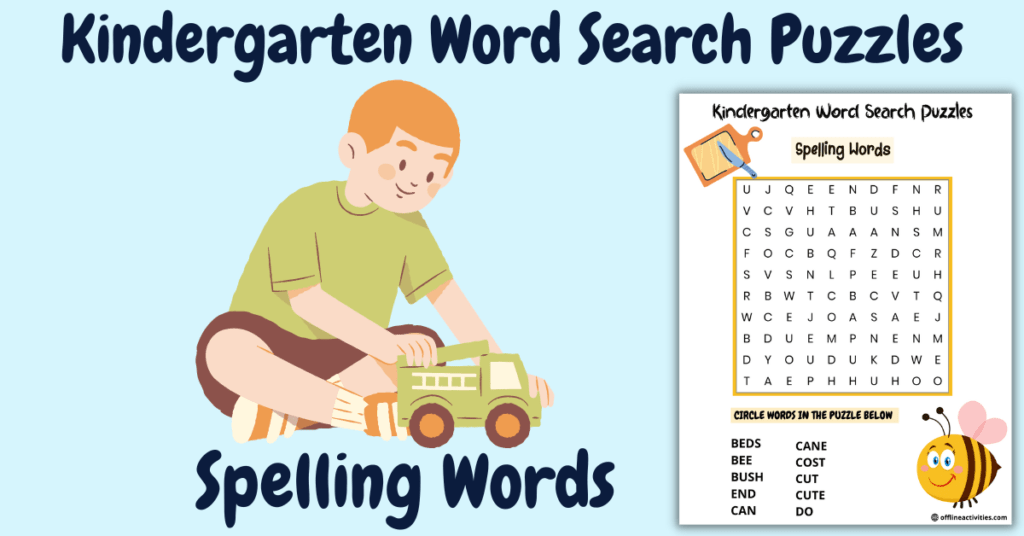
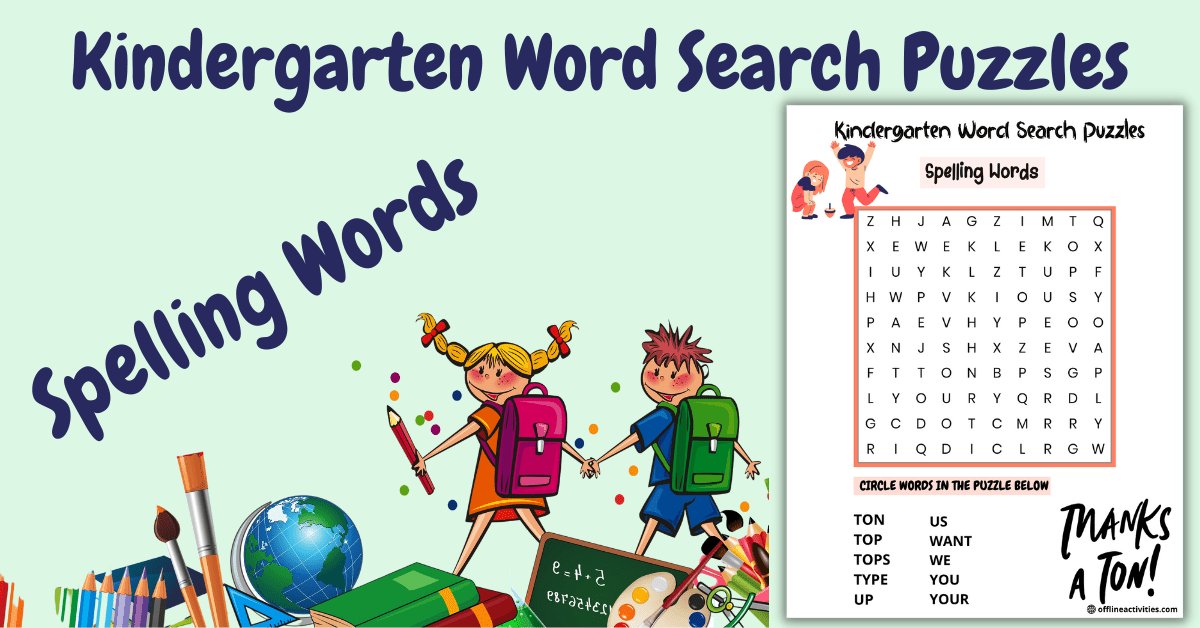
Children love the feeling of spotting something hidden and calling out, “I found it!” That moment of excitement is exactly what makes word search puzzles so powerful for young learners. For a kindergarten child, finding familiar words in a puzzle feels like a small victory that builds confidence and curiosity. Instead of worrying about getting something wrong, children focus on the joy of searching, recognizing, and celebrating words they know. This printable word search turns spelling review into a positive, child-led experience that supports early reading skills in a calm and playful way.
Why This Activity Works
Kindergarten children learn best when they are actively involved and emotionally comfortable. Word search puzzles meet both needs by combining movement of the eyes, quiet focus, and problem-solving into one simple activity. As children scan the grid to find words, they strengthen visual discrimination, letter recognition, and sustained attention.
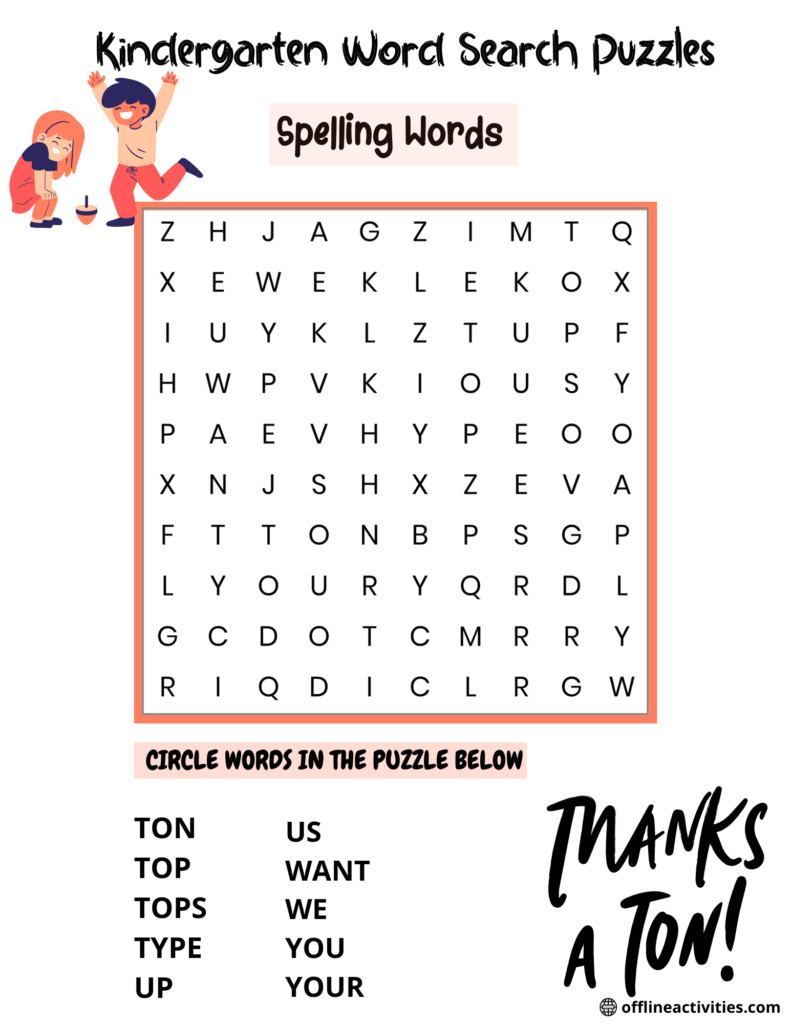
Spelling words such as “we,” “you,” and “want” are commonly used in early reading and writing. Seeing these words repeatedly in a puzzle helps children store them in long-term memory. This repeated exposure supports reading fluency without requiring memorization or pressure.
Screen-free activities like word searches also support healthy brain development. Young children tend to focus longer on paper-based tasks than digital ones, which helps improve patience and task completion. The absence of screens allows children to learn at their own pace, guided by curiosity rather than timers or animations.
Print Puzzle
How to Use the Activity
Begin by printing the word search puzzle on regular paper. Sit with your child and read the word list together, pointing to each word as you say it aloud. This step helps children connect spoken language with written text.
Invite your child to search for one word at a time. Some children like to use their finger to trace letters before circling the word, while others prefer using a pencil or crayon. Both approaches are perfectly fine and support fine motor development.
To adapt the activity by age or skill level, you can start with just three or four words for younger children and gradually increase the number. Older kindergarteners can be encouraged to find words independently or even help a friend or sibling.
For a fun extension, ask your child to say a sentence using one of the words they found, or challenge them to find the word later in a storybook. These small connections strengthen learning without turning it into a lesson.
Educational Foundations
From real classroom and home experience, educators observe that children remain engaged longer when learning feels like play. Word search puzzles provide that balance, offering structure without rigidity.
From an expertise standpoint, this activity supports early literacy skills such as orthographic awareness, visual scanning, and word recognition. These skills are essential for transitioning from learning to read to reading with confidence.
This approach aligns with Montessori and active learning philosophies, where children learn through exploration and self-correction. The puzzle allows children to notice patterns, try different strategies, and experience success independently.
The activity is safe, age-appropriate, and screen-free. It does not rely on fast-paced stimulation or rewards, making it suitable for calm learning environments at home or in the classroom.
Word Search Puzzles vs Screen-Based Spelling Games
Word Search Puzzles
Encourage quiet focus
Support independent learning
Promote visual word recognition
Reduce overstimulation
Screen-Based Games
Short attention bursts
Often require constant feedback
Can distract from learning goals
Increase screen dependency
Frequently Asked Questions
What age is this activity designed for?
This word search puzzle is ideal for kindergarten children ages 4–6. It can also support preschoolers beginning to recognize words and first graders who need review.
Can teachers use this in the classroom?
Yes. Teachers often use word searches during literacy centers, morning work, or as a calm transition activity between lessons.
Is this suitable for ESL learners?
Absolutely. The visual format helps English learners recognize common words without relying solely on phonics or verbal instruction.
How long does the activity usually take?
Most children complete the puzzle in 10 to 15 minutes, depending on their focus and familiarity with the words.
How can I make it more engaging for my child?
You can use colored pencils, celebrate each word found, or turn it into a cooperative activity where children search together.
Does my child need to spell perfectly to use this?
No. This activity focuses on recognition, not spelling accuracy, making it supportive for early learners.
Conclusion
When children enjoy learning, progress happens naturally. This kindergarten word search puzzle transforms spelling review into a child-centered activity filled with curiosity and small moments of success. By allowing children to explore words visually and independently, the puzzle builds confidence, focus, and early literacy skills. Download this printable and give your child a gentle, screen-free way to grow as a reader and speller—one joyful word at a time.
MORE PUZZLES FOR YOU:
Kindergarten Word Search Puzzles – Spelling Words
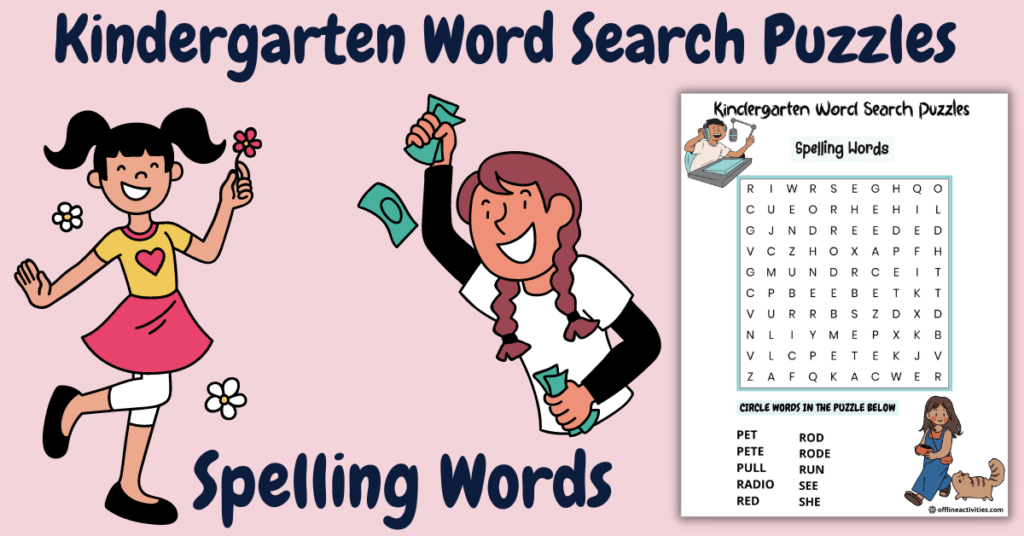
Kindergarten Word Search Puzzles – Spelling Words
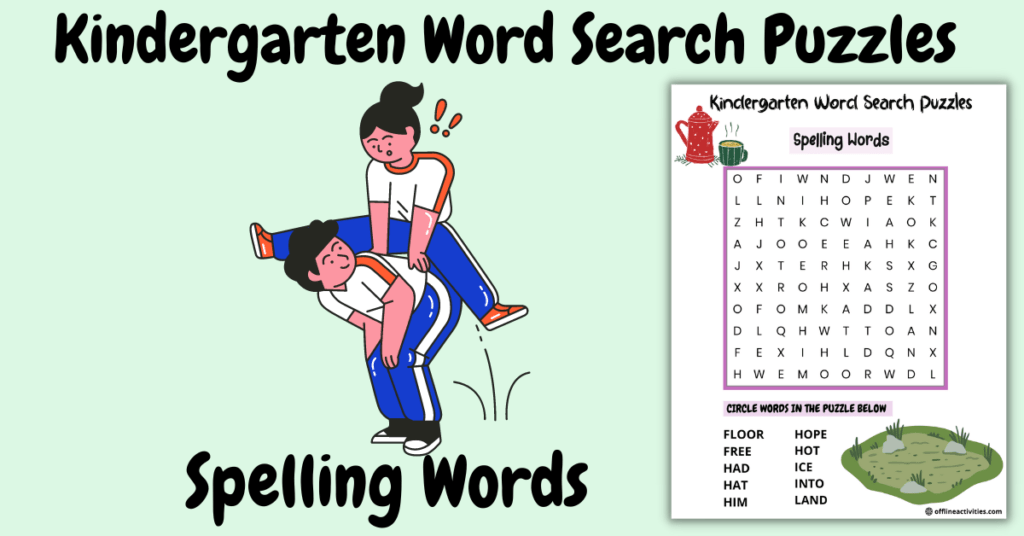
Kindergarten Word Search Puzzles – Spelling Words