From my small reading table in the corner of our first-grade classroom, I’ve noticed a beautiful pattern. During our quiet activity time, the moment I place a fresh word search on the table, a little buzz of focused energy fills the space. Fingers start tracing the grid, eyes scan with purpose, and quiet whispers of “I found one!” are shared. It’s in these moments, away from any screen, that I see foundational reading and spelling skills click into place. This first grade word search printable, with its gentle theme and familiar words, is more than just a time-filler; it’s a strategic tool for building confidence and vocabulary in a calm, self-paced way. Let me show you how this simple worksheet fosters essential early literacy skills, both in the classroom and at your kitchen table.

Table of Contents
TogglePrint Puzzle
Why This Activity Works
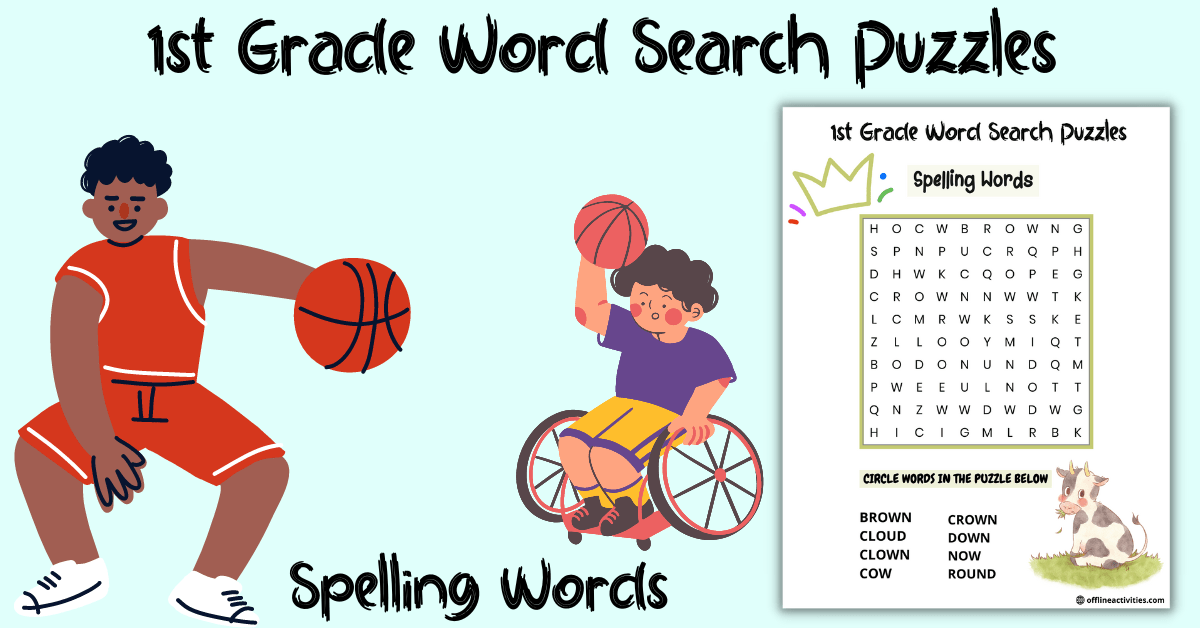
At first glance, a word search might seem simple, but its educational value for a 6- or 7-year-old is profound. This activity is a multi-skill exercise disguised as a game. It directly builds visual discrimination—the ability to see differences between similar letters, which is crucial for reading fluency. As children hunt for words like “CLOWN” and “CROWN,” they are practicing spelling pattern recognition, noticing how letter sequences form familiar sounds and words.
The focused scanning required is a masterclass in sustained attention. In an age of quick digital cuts and sounds, the quiet perseverance needed to search a grid is a vital skill for all future learning. Furthermore, the act of carefully circling each word is excellent, low-pressure practice for fine motor control and pencil grip. It’s well understood that hands-on, screen-free activities like this support deeper cognitive processing and memory retention than passive screen consumption, giving young minds the space to practice and solidify new knowledge.
How to Use This Word Search Activity
Let’s walk through how to introduce this activity to ensure it’s a positive, successful experience.
Downloading and Getting Started:
First, download the high-quality PDF file. Print it on standard paper. For classroom use or to make it reusable at home, consider slipping it into a clear plastic sleeve. Your child can then use a dry-erase marker, allowing for repeated practice and easy clean-up.
Guiding the Activity with a Calm Presence:
Begin by looking at the word list together. Read each word aloud. For words like “BROWN” and “ROUND,” you might ask, “Can you think of something that is brown?” or “What is something round?” This connects the abstract word to their concrete world. Then, demonstrate by finding the first word together. Show them how to slowly scan each row, looking for the starting letter. Your role is to be a supportive guide, offering encouragement like, “You’re looking so carefully,” rather than giving away answers.
Adapting for Different Learners:
-
For Beginners or Younger Siblings (Ages 5-6): Reduce the word list. Focus on finding just three or four of the shorter words, like “COW,” “NOW,” and “DOWN.” You can even highlight the row the word is in to narrow the search area.
-
For First Graders (Ages 6-7): Use the activity as designed. For an extra layer of learning, after they circle a word, ask them to spell it aloud or use it in a sentence.
-
For a Challenge (Ages 7-8): Hide the word list! Read the words aloud and have them find them based on auditory memory. Or, time them to see how quickly they can find all eight, turning it into a fun self-competition.
Fun Extension Ideas:
-
Story Creator: Once all words are found, challenge your child to tell a silly story using as many of the words as possible. (“The brown clown put a crown on the cow while a cloud went round and round!”)
-
Rainbow Words: Use a different colored crayon or marker for each word.
-
Sound Sorter: After completing the puzzle, have them group the words by their dominant sound (e.g., words with /ow/ like CLOUD, ROUND; words with /ow/ like BROWN, DOWN, CROWN).
The Educational Foundations Behind the Fun
In my classroom, I use word searches as a transitional “settling” activity or a choice during literacy centers. I’ve observed how they cater to different learning styles: visual learners thrive on the search, while kinesthetic learners engage through the physical act of circling. They offer a point of accessible success for every child, which is so important for building a positive relationship with learning.
From a cognitive expertise standpoint, this puzzle integrates several key processes. It activates orthographic mapping—the mental process we use to store written words for instant retrieval—as children see the sequence of letters repeatedly. It also engages executive functions like working memory (holding the word in mind while searching) and cognitive flexibility (shifting search strategies).
This approach is deeply aligned with active learning principles, where the child is the agent of their own discovery. It also supports Montessori-inspired values of auto-education and concentration, allowing a child to work independently at their own pace. You can trust that this activity provides safe, age-appropriate cognitive engagement without overstimulation, focusing purely on skill development through play.
Printable Puzzles vs. Digital Apps: A Learning Value Comparison
| Aspect | Printable Word Search | Vocabulary Game App |
|---|---|---|
| Focus & Attention | Promotes deep, uninterrupted concentration on a single task. | Often includes flashing rewards, sounds, and level changes that can splinter attention. |
| Learning Environment | Creates a calm, tactile learning space, free from blue light. | Screen use, especially before bed, can disrupt sleep patterns and calmness. |
| Skill Application | Connects directly to the physical act of writing and paper-based tasks found in school. | Skills are often isolated to tapping and swiping, which don’t translate to classroom tools. |
| Ownership of Work | Provides a tangible record of effort and accomplishment to be proud of. | Progress is often intangible, stored in a device, and easily forgotten. |
| Customization | Easy for a parent or teacher to adapt on the fly (cover words, use markers). | Typically locked into the app’s pre-programmed difficulty path. |
Frequently Asked Questions
What is the ideal age for this word search?
This puzzle is designed specifically for first graders, typically ages 6-7. It can be a great challenge for advanced kindergarteners or a quick, confidence-boosting review for second graders.
Can I use this in my classroom of 25 students?
Absolutely. It’s an excellent independent literacy center activity, morning work sheet, or a quiet task for early finishers. The clear design and familiar words make it easy for a large group to use successfully with minimal direction.
My child is learning English. Is this suitable?
Yes, it can be a wonderful support for ESL learners. The concrete nature of the words (COW, CLOUD) paired with the visual hunt helps build vocabulary and letter pattern recognition in a low-pressure, engaging way.
How long should this activity take?
There’s no right answer! Some children will methodically find all words in 10 minutes, others may enjoy working on it intermittently over 20-30 minutes. The goal is focused engagement, not speed.
What if my child gets frustrated and can’t find a word?
This is a great teaching moment for perseverance. Gently suggest they take a break and look at the puzzle from a different angle, or search for the word’s last letter instead of the first. Remind them that it’s okay to skip one and come back to it later.
How does this align with what they learn in school?
It directly supports the phonics and word study work done in first grade, particularly with vowel teams (like OW in BROWN) and word families. It reinforces the sight words and decoding skills that are the bedrock of early reading.
Do you have other printables with similar words?
We do offer a variety of themed and skill-based printable packs that build on these concepts, such as phonics families and seasonal vocabulary sets, all designed for calm, screen-free learning.
Bringing Calm Focus to Learning
The true magic of an activity like this isn’t just in the words found; it’s in the quiet confidence built along the way. Each circle drawn around “CLOWN” or “CROWN” represents a moment of independent problem-solving, a small victory in visual tracking, and a step toward reading fluency. It turns essential practice into a peaceful, focused ritual.
Download this printable word search and create a moment of calm, screen-free learning today.
MORE PUZZLES FOR YOU:
Word Search Download- Spelling Words
Game Word Search Download- Spelling Words

Word Searches Printable- Spelling Word