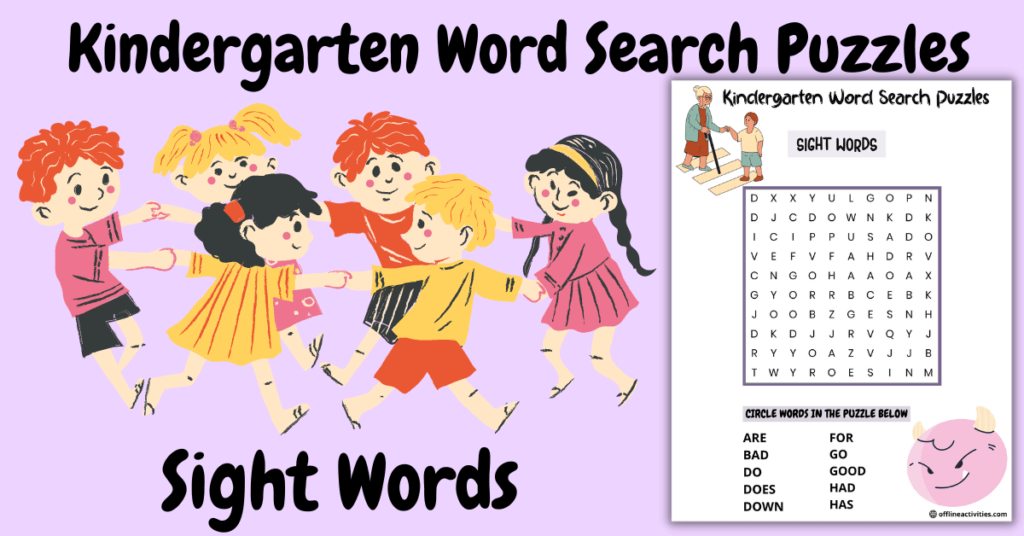
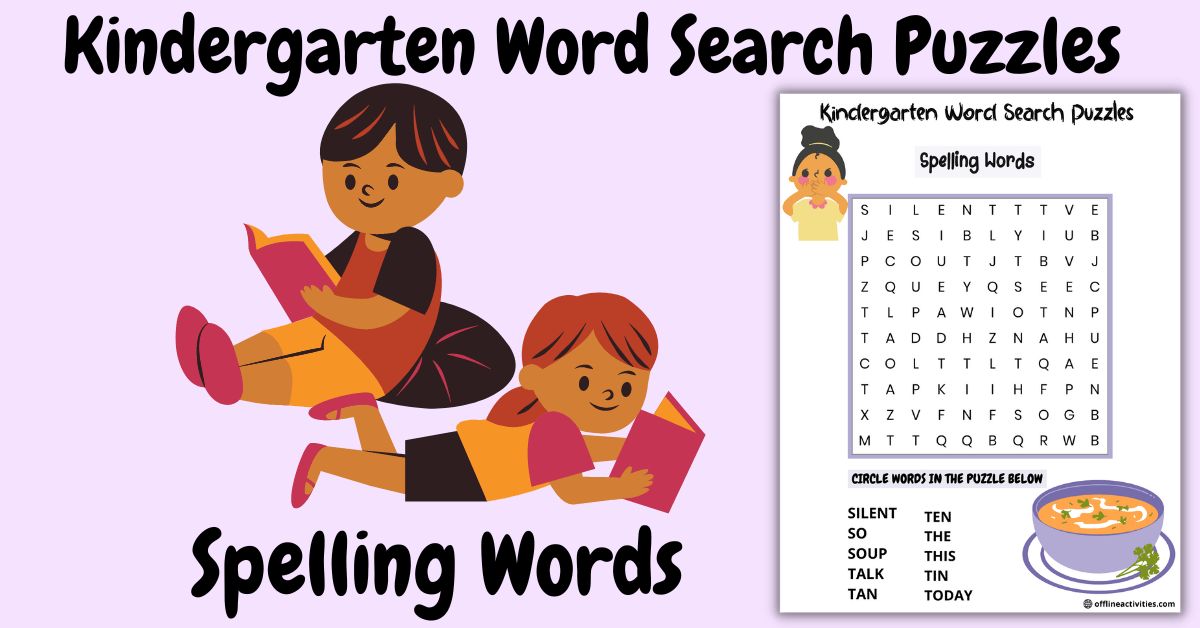
When children recognize sight words quickly and without hesitation, reading becomes smoother, more enjoyable, and far less frustrating. This word search puzzle is designed to help kindergarten learners reach that exact outcome: faster word recognition, stronger reading confidence, and calmer learning moments. Instead of drilling or memorization, children practice sight words in a playful, low-pressure way that feels like a game. As they search for words they’ll encounter again and again in early books, they begin to trust their reading abilities. In this article, you’ll learn how sight word word search puzzles support early literacy and how to use them effectively at home or in the classroom.
Why This Activity Works
Sight words are the backbone of early reading. Words like “the,” “this,” and “today” appear so frequently that children need to recognize them instantly, without sounding them out. Word search puzzles support this process by encouraging repeated visual exposure in a relaxed setting.
As children scan the grid, they strengthen focus and visual tracking skills, both of which are essential for reading lines of text. Finding words hidden in different directions also supports problem-solving and cognitive flexibility. Unlike worksheets that require writing or spelling from memory, word searches allow children to engage successfully even if they are still developing fine motor control.
Screen-free activities like this one are especially valuable for young learners. Studies in early childhood education consistently show that paper-based activities promote longer attention spans and reduce cognitive overload. When children learn without screens, they process information more deeply and retain it longer.
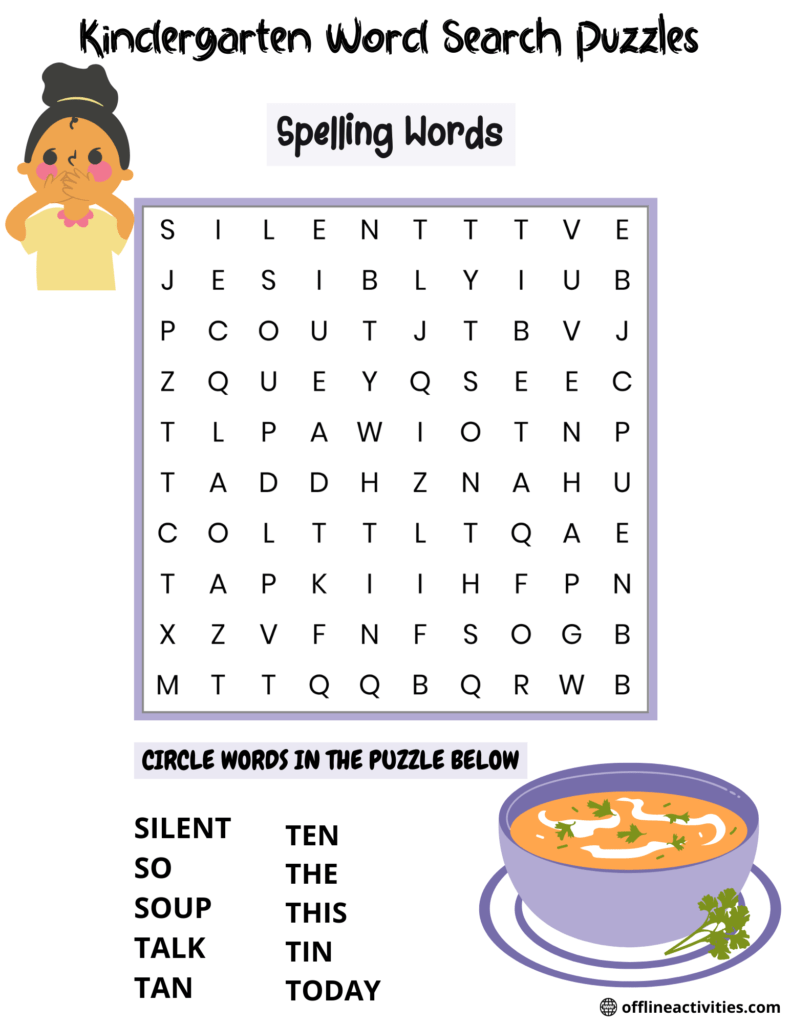
Print Puzzle
MORE PUZZLES FOR YOU:
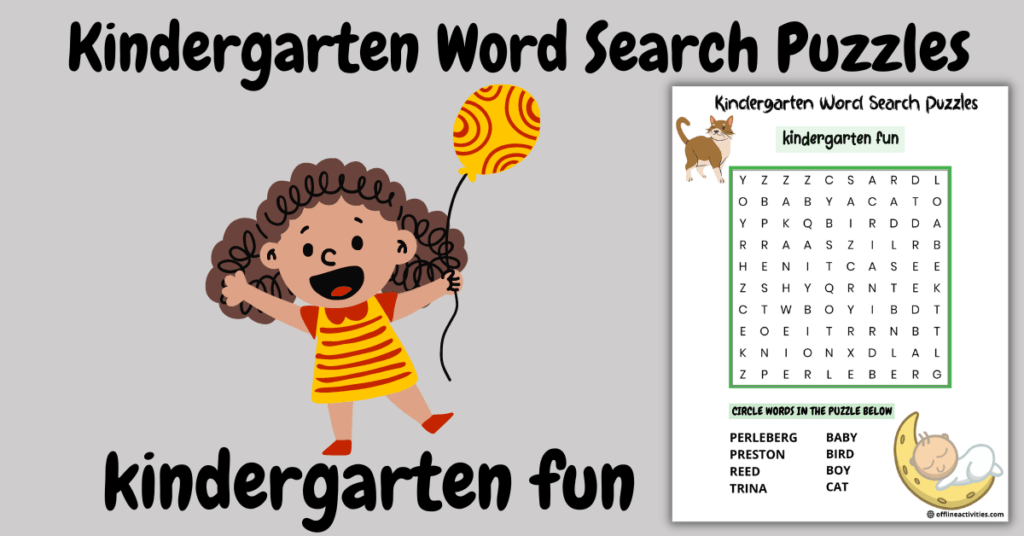
Word Search for Kindergarteners
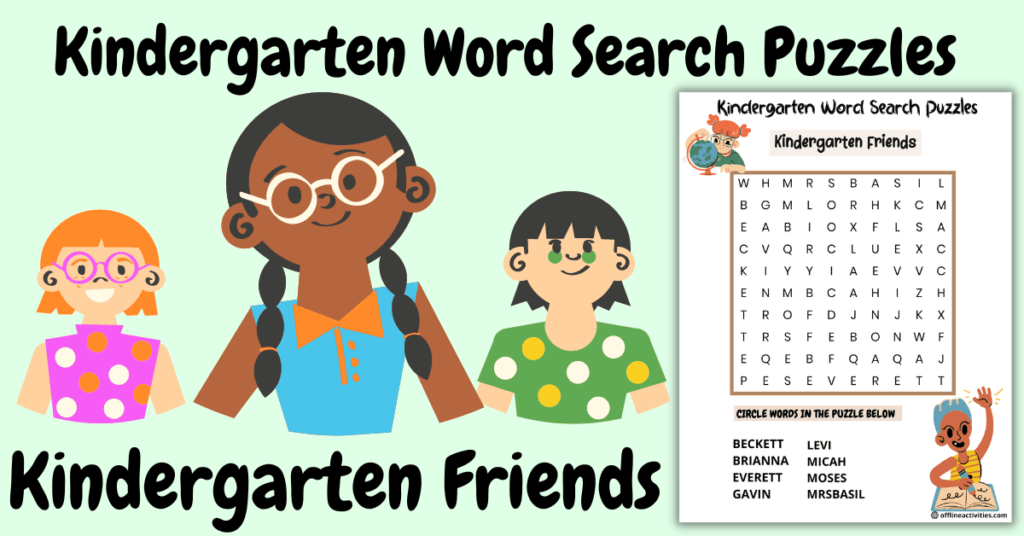
Word Search Free Printable – Kindergarten Friends
Kindergarten Word Search Puzzles – SIGHT WORDS