The room is quiet except for the soft sound of pencils moving across paper. One student pauses, scans the page again, then circles a word with a small nod of satisfaction. Across the table, another child checks the word list carefully before continuing. There is no rush, no calling out answers, and no need for reminders to stay focused. Moments like this often happen during word search activities, when children feel calm and capable. This first-grade vocabulary word search was created to support exactly this kind of learning moment, where spelling practice feels steady, manageable, and confidence grows naturally.
Why This Activity Works
Word search puzzles work because they allow children to engage with words at their own pace. Instead of memorizing or guessing, students must look carefully, compare letters, and confirm spelling visually. This process strengthens focus, attention to detail, and early reading skills at the same time.
Key skills supported by this activity include:
• Vocabulary recognition and spelling accuracy
• Visual scanning and sustained attention
• Problem-solving and logical thinking
• Fine-motor control through circling and marking words
• Independent task completion
Screen-free activities like this one play an important role in early learning. When children work on paper, they are less distracted and more aware of what they are doing. Many teachers observe that students remain engaged longer during quiet, hands-on tasks than during fast digital activities, especially during literacy practice

Print Puzzle
How to Use the Activity in the Classroom or at Home
To begin, download and print the worksheet on standard paper. The layout is clear and uncluttered, making it easy for first-grade students to follow. Teachers often prepare a class set, while parents may print a single copy for focused home practice.
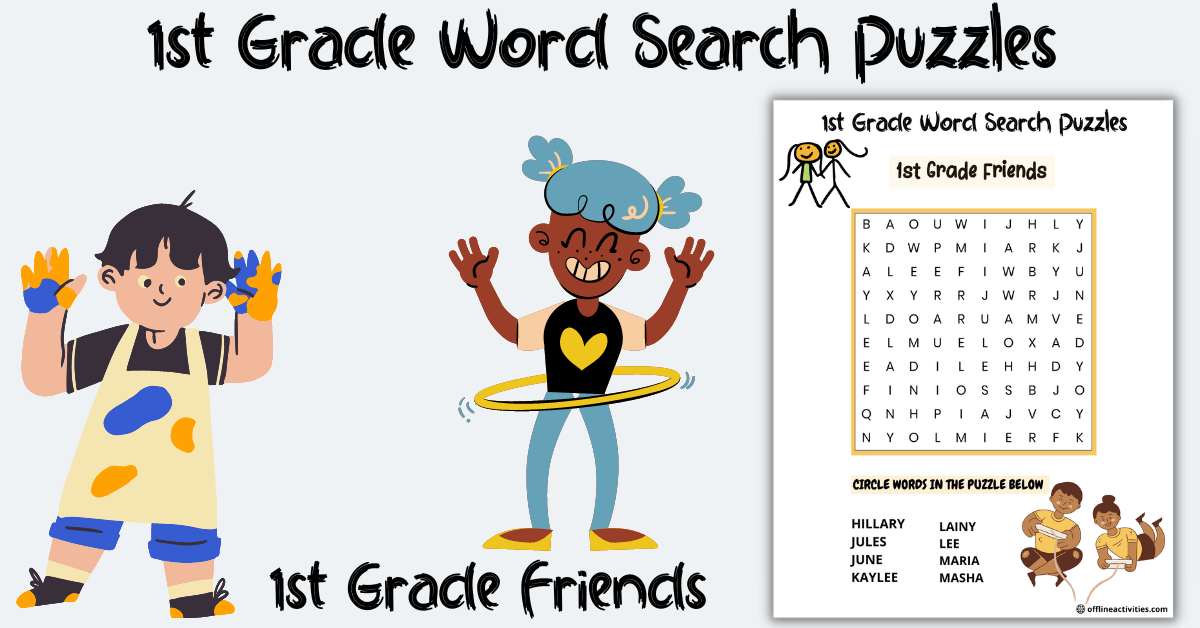
Before starting, it helps to introduce the vocabulary words aloud so children know what they are looking for. The words included in this puzzle are:
HILLARY
JULES
JUNE
KAYLEE
LAINY
LEE
MARIA
MASHA
Reading the words together builds familiarity and reduces hesitation. In the classroom, this might happen as a short group moment. At home, a parent can read the list calmly and ask which names sound familiar.
During the activity, encourage children to work slowly. There is no need to finish quickly. Teachers often move quietly around the room, offering support only when a student feels stuck. At home, sitting nearby without giving answers helps children build confidence.
To adapt the activity by age or ability:
• Younger learners can search for fewer words at a time
• Developing readers can complete the full puzzle independently
• More confident students can write the words neatly after finding them
Simple extensions can deepen learning without adding pressure. Children may sort names by length, copy their favorite word, or use two names in a short oral sentence.
Educational Foundations You Can Trust
This activity is grounded in real classroom use. Teachers frequently choose word search puzzles during literacy centers or independent work time because students respond positively to them. The calm structure helps reduce frustration, especially for children who feel unsure during spelling tasks.
From an expertise perspective, word search activities support orthographic mapping, which helps children store the visual form of words in memory. They also strengthen working memory and attention control, both essential for early reading success.
The design aligns well with Montessori-inspired independent learning, where children engage in purposeful, self-directed work. It also supports active learning and kinesthetic development by involving physical interaction with the page. The activity is age-appropriate, screen-free, and safe for repeated classroom or home use.
Printable Word Searches vs Screen-Based Activities
Printable Word Search Puzzles
Support steady concentration
Encourage careful visual attention
Build handwriting and pencil control
Reduce overstimulation
Fit naturally into classroom routines
Screen-Based Activities
Often encourage quick tapping
Shorter attention spans
Limited handwriting practice
Higher distraction risk
Frequently Asked Questions
What age is this activity best for?
This printable works best for children aged 5–8, especially first-grade students developing vocabulary and spelling confidence.
Can teachers use this worksheet in class?
Yes. It is suitable for literacy centers, independent work periods, early finisher tasks, or small-group instruction.
Is this activity helpful for ESL learners?
Yes. Repeated visual exposure to words supports recognition and confidence for English language learners.
How long does the activity usually take?
Most students complete the puzzle in about 10–15 minutes, depending on focus and familiarity with the words.
How can the activity be extended without adding stress?
Teachers and parents can add light extensions such as copying words neatly, sorting by length, or discussing which names sound similar.
What if a child becomes frustrated?
You can reduce the number of words, search together briefly, or pause and return later. The goal is confidence, not completion.
Conclusion
Some of the most meaningful learning happens during quiet moments when children feel capable and focused. This first-grade vocabulary word search creates space for that kind of learning. It allows students to practice spelling and word recognition without pressure, distractions, or screens. Whether used in the classroom or at home, the activity supports steady progress, independence, and calm engagement. Download this printable and use it as part of a balanced, thoughtful approach to early literacy learning.
MORE PUZZLES FOR YOU:
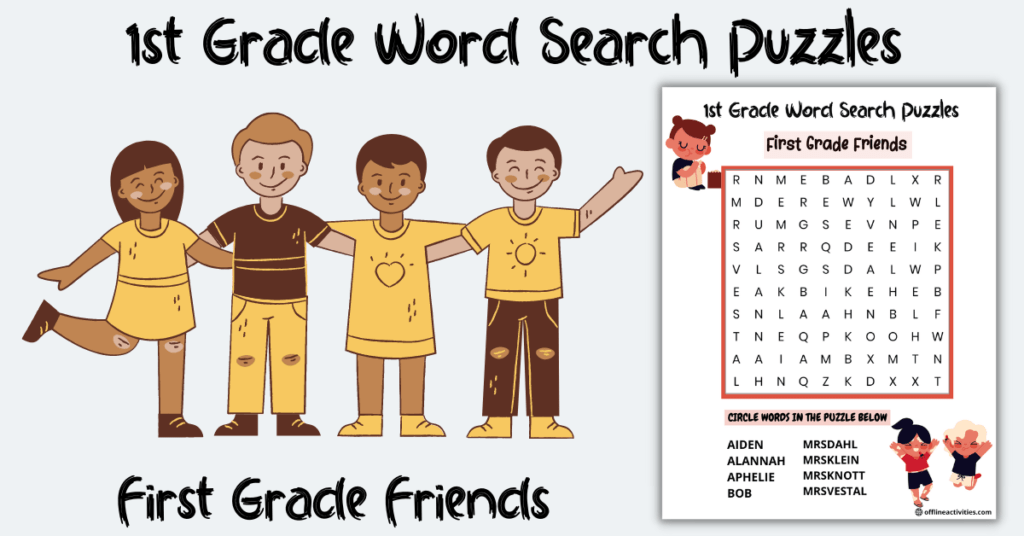
1st Grade Word Search Puzzles- First Grade Friends
Word Search Puzzles- 1st Grade Friends
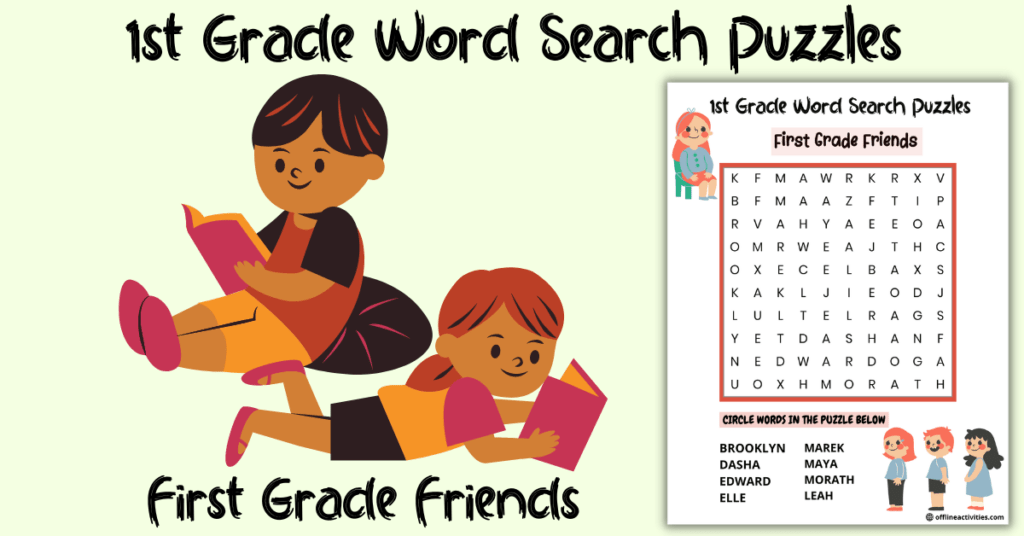
Puzzle Find The Words- 1st Grade Friends