I still remember a moment during a quiet reading session when a child confidently read a word aloud, then paused and asked, “Why does this word look like another one I know?” That small question captured something important: early readers are constantly comparing, noticing, and making sense of patterns. Word search puzzles support exactly this kind of thinking. Instead of asking children to memorize spelling words in isolation, this printable activity invites them to scan, recognize, and reflect on words in context. In this article, you will learn how word search puzzles strengthen spelling, vocabulary, and reading comprehension, and how to use them effectively with young learners.
Why This Activity Works
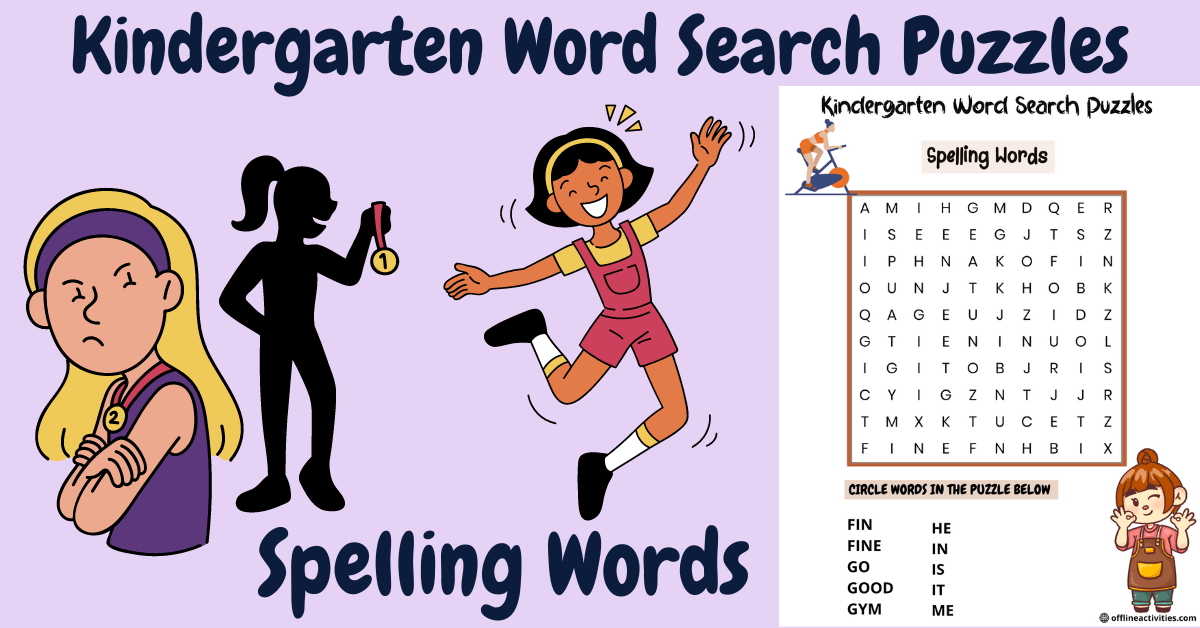
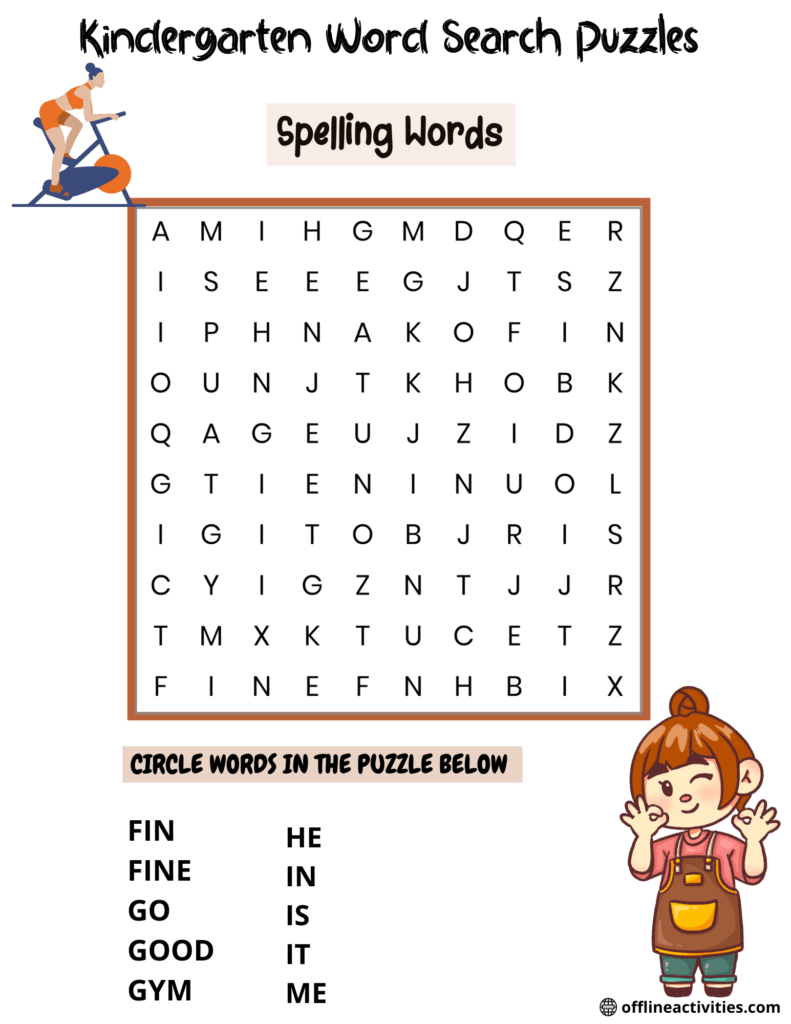
Word search puzzles are simple on the surface, yet they support multiple early literacy skills at the same time. When children search for words such as FIN, FINE, or GOOD, they practice visual scanning, an essential skill for reading fluency. At the same time, they learn to notice how small changes in letters can change meaning, which builds stronger word awareness.
Language development also improves through repeated exposure. Seeing common words like HE, IN, IS, and IT again and again helps children store them in long-term memory. As a result, these words become easier to recognize during reading activities. Problem-solving skills are involved as well, because children must decide where to look next and how to approach the grid when a word is difficult to find.
Fine motor skills play an important role too. Holding a pencil, circling letters, or tracing words supports hand control and prepares children for writing. Screen-free learning is especially valuable at this stage because young children benefit from focused, hands-on tasks. Studies in early education consistently show that short, paper-based activities can improve attention and reduce distractions during learning time.
Print Puzzle
How to Use the Activity
Start by downloading and printing the word search worksheet on clear, standard paper. Make sure the print is large enough for young eyes to follow comfortably. Before beginning, read the list of spelling words aloud together. This step helps children connect spoken language with printed text.
Guide your child calmly as they work. Encourage them to look for the first letter of each word, then follow the letters in a straight line. If they struggle, offer gentle support rather than direct answers. For example, you might say, “This word starts with G. Let’s look for a G together.”
The activity can easily be adapted by age or ability. Younger children may focus on finding only four or five words, while more confident learners can search for all ten. You can also turn the activity into a shared experience by working together and taking turns finding words.
To extend learning, invite the child to read each word aloud after finding it. Another idea is to ask them to use the word in a simple sentence. These small additions strengthen comprehension without adding pressure.
Educational Foundations
This activity reflects real experience from classrooms and homes where children learn best through calm, structured practice. Teachers often use word searches during literacy centers because they encourage independence and concentration. Parents value them as quiet activities that fit easily into daily routines.
From an expertise perspective, word search puzzles support key cognitive skills such as pattern recognition, working memory, and phonics awareness. Children learn that words are made of predictable letter sequences, which supports both spelling and reading.
The approach aligns with Montessori and active learning principles by allowing children to explore and self-correct. Kinesthetic learning is present as children interact physically with the worksheet, reinforcing learning through movement.
Trustworthiness is essential. This printable activity is age-appropriate, safe, and completely screen-free. It focuses on learning rather than entertainment, which supports healthy habits and meaningful progress.
Comparison Table
Word Search Puzzles vs Flashcards
Word Search Puzzles
Encourage scanning and reading behaviors
Support independent problem-solving
Build focus through discovery
Flashcards
Emphasize quick recall
Often adult-led
May feel repetitive over time
FAQ Section
What age group is this activity designed for?
This word search is ideal for kindergarten-aged children, typically between 4 and 6 years old. It can also support early first graders who are still building basic spelling skills.
Can this be used in a classroom setting?
Yes, teachers can use this activity during literacy centers, morning work, or quiet practice time. It works well for individual learning and small groups.
Is this suitable for ESL learners?
Absolutely. ESL learners benefit from visual exposure to common words, which supports vocabulary building and reading confidence.
How long does the activity usually take?
Most children complete the puzzle in 10 to 15 minutes. The time can be adjusted by limiting the number of words searched.
How can I support a child who feels frustrated?
Offer encouragement and small hints rather than correcting immediately. Working together can help reduce frustration and build confidence.
Do children need to read fluently to use this?
No, emerging readers benefit greatly from recognizing familiar words visually, even before full reading fluency develops.
Conclusion
Word search puzzles offer a thoughtful way to support spelling, vocabulary, and early reading comprehension. By scanning for words, children strengthen focus, notice patterns, and build confidence with language. Whether used at home or in the classroom, this printable activity fits naturally into a calm, screen-free learning routine. Download this worksheet and enjoy a meaningful learning moment together, one word at a time.
MORE PUZZLES FOR YOU:
Kindergarten Word Search Puzzles – Spelling Words
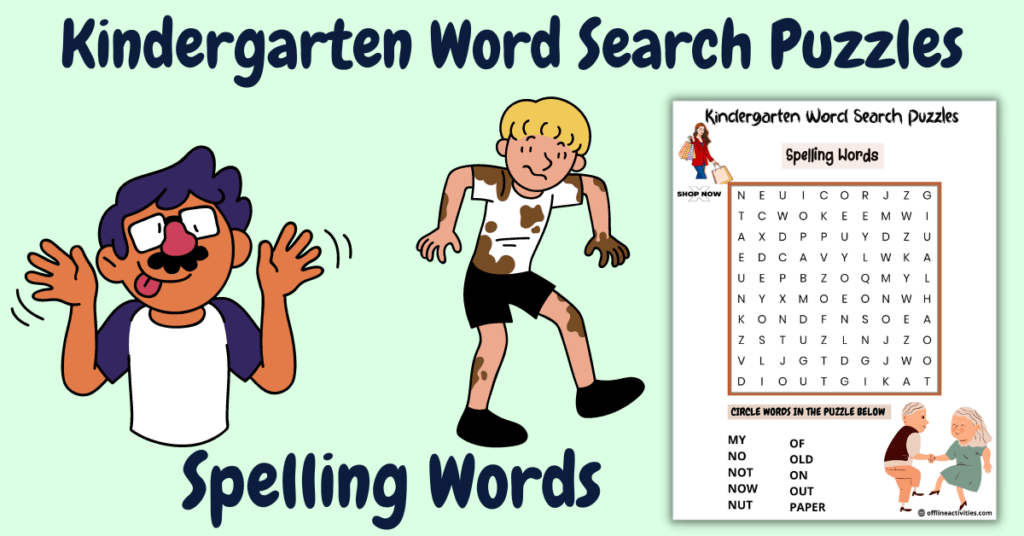
Game of Word Search– Spelling Words
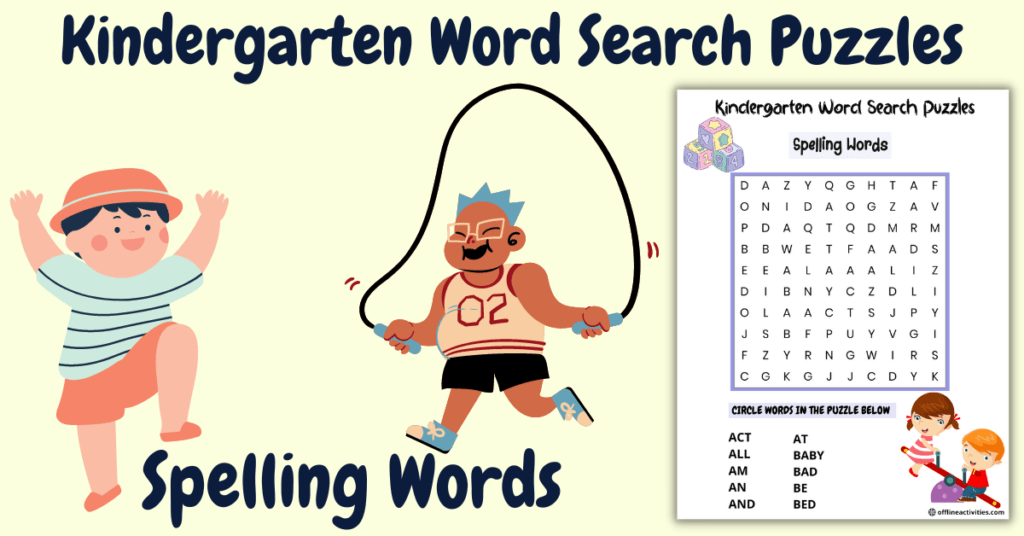
Puzzle Word Search – Sight Words