Ever had one of those long, lazy afternoons where the energy dips, boredom creeps in, and the siren call of the tablet becomes a little too tempting? We’ve all been there. But what if you could turn that exact moment into a memory—a burst of shared laughter and discovery that costs nothing but a piece of paper and a dash of imagination?
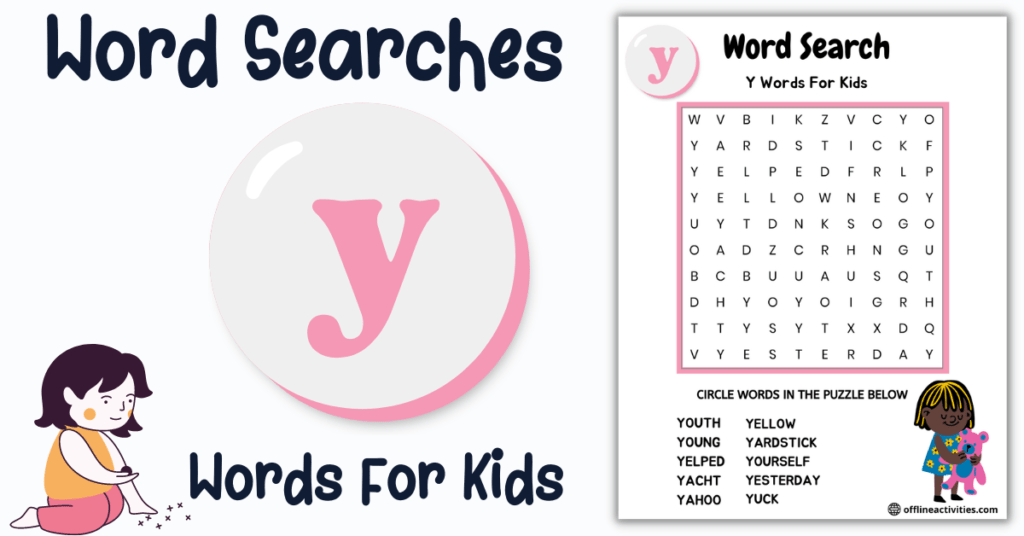
This isn’t about another worksheet. This is a blueprint for a family adventure, disguised as a simple “Words That Start With Y” word search. We’re moving beyond the table to create a playful, multi-sensory experience that builds vocabulary, connection, and a genuine love for the quirks of language. Let’s trade screen-time scrolling for story-time exploring.
The Adventure Plan: From Puzzle to Playtime
Forget silent, solo puzzling. Let’s transform this printable into a shared mission. Here’s how to guide your crew on a memorable “Letter Y” quest.
Phase 1: The Expedition Briefing (Setting the Scene)
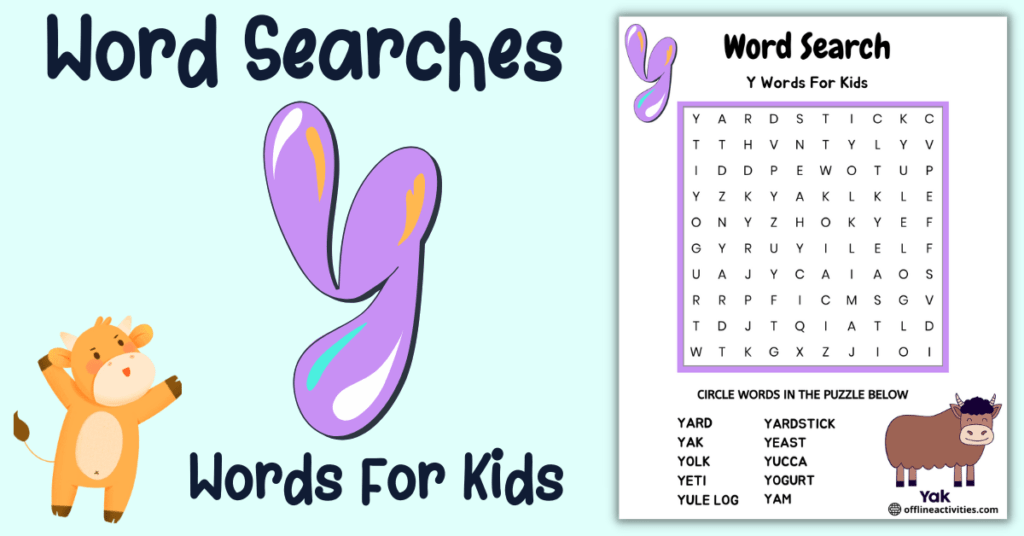
Gather your little explorers. Hold up the printed word search. “Team, we have a special mission today. We’re going on a treasure hunt for the most interesting, silly, and surprising letter in the alphabet: the letter Y! It makes a funny /y/ sound, like when you say Yippee! or Yikes! Our map has hidden words that start with this sneaky letter. Who’s ready to explore?”
Phase 2: The Hunt & The Discovery (The Heart of the Adventure)
This is where the magic happens. Don’t just circle words—bring them to life.
-
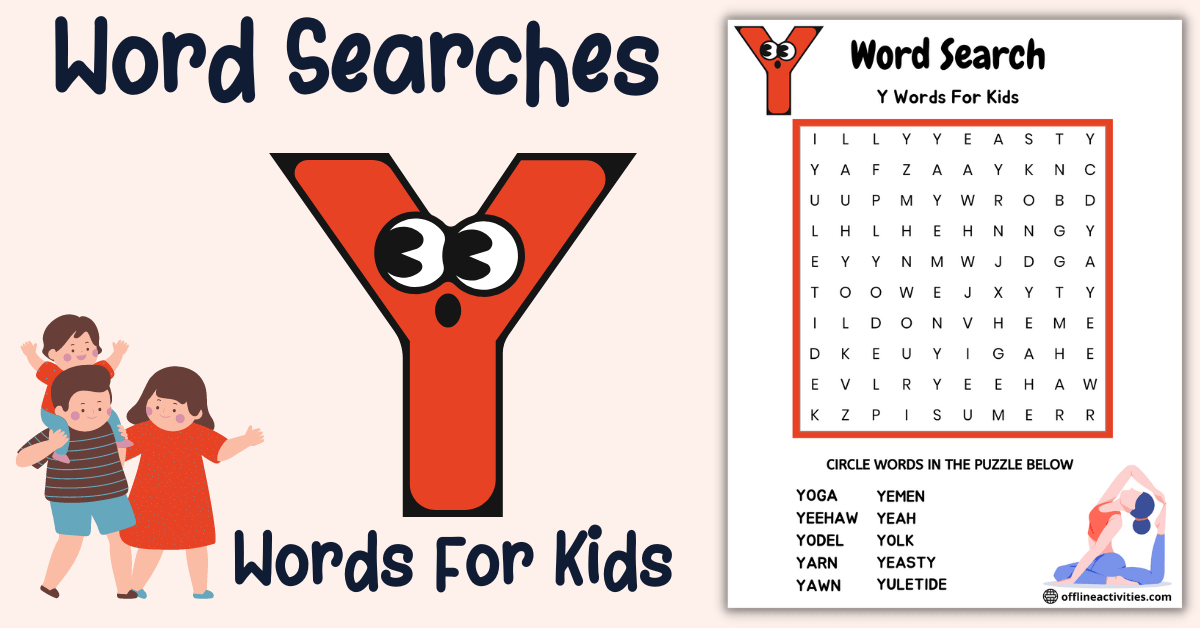
“Yodel” – The Sound Challenge: Find “Yodel” first? Perfect! Pause the search and have a family yodeling contest. Who can make the silliest, most echo-y mountain call?
-
“Yawn” – The Dramatic Pause: Discover “Yawn”? Everyone must perform their most dramatic, stretching, theatrical yawn. Talk about a fun brain break!
-
“Yoga” – The Movement Minute: Stumble upon “Yoga”? Everyone stands up and holds a simple tree pose or downward dog for 10 seconds.
-
“Yemen” – The World Connection: For older kids, finding “Yemen” is a chance to sprint to a globe, world map, or tablet (used intentionally!) to find where this country is. What’s the weather like there today?
The goal isn’t speed; it’s engagement. Each word found is a pit stop for a mini-activity.

Print Puzzle
Phase 3: Beyond the Grid (Extending the Expedition)
The word search is just the launchpad. Now, use your found words as fuel for creativity.
-
Story Spark: Cut out the word list (or use our included story cards). Have each family member draw three random words (e.g., Yak, Yeah, Yuletide). Together, invent a wildly absurd 5-sentence story that uses all of them.
-
Artifact Creation: Ask, “If ‘Yeasty’ dough could talk, what would it say?” Draw a talking loaf of bread. What would a “Yarn” ball dream about? Let them illustrate it.
-
Real-World Spy: Later that day or week, become “Y” spies. Can you spot something Yellow at the grocery store? Hear someone say “Yeah“? This builds lasting phonological awareness.
Why This “Playful Learning” Approach Works: The Science of Engagement
This method taps into what educators call integrated, play-based learning. It’s not drilling; it’s discovering.
-
Cognitive Science: When a child acts out a word (kinesthetic learning), hears it (auditory), and sees it (visual), the brain forms multiple, stronger memory pathways. That word “yodel” is no longer just text; it’s an experience.
-
Social-Emotional Development: The shared laughter during the “yawn” challenge or the collaboration in creating a story reduces stress and builds family bonds. It transforms a learning task into positive social interaction.
-
Executive Function: Managing the small challenges (“Let’s find just two more before we act out ‘Yoga'”) practices impulse control, working memory, and task persistence in a joyful, low-pressure setting.
| Learning Style | How This Adventure Activates It | Real-Time Example |
|---|---|---|
| Visual-Spatial | Scanning the grid, recognizing letter shapes. | “I see a ‘Y’ hiding in the corner!” |
| Auditory | Making and hearing the sounds of new words. | The silly chorus of family yodels. |
| Kinesthetic | Acting out words, moving around. | Holding a yoga pose together. |
| Interpersonal | Collaborating, taking turns, building a story. | “You add the next sentence to our Yak tale!” |
Your Adventure FAQ
Q: My kids are 3, 6, and 8. Can they all do this together?
A: Absolutely! That’s the beauty of this approach. Your 3-year-old can hunt for the big “Y”s and act out “Yawn.” Your 6-year-old can find shorter words like “Yeah” and “Yoga.” Your 8-year-old can tackle “Yuletide” and lead the research on “Yemen.” It’s designed for multi-age collaboration.
Q: I’m a teacher. Can I use this for a whole class?
A: Yes! It’s perfect for a literacy station. Print a few copies, or project the word search on a board for a whole-class “I Spy” game. The “Act It Out” breaks are ideal for managing classroom energy and reinforcing vocabulary in a memorable way.
Q: This seems fun, but is it really “educational”?
A: Deeply so. It covers phonics (the /y/ sound), vocabulary acquisition (introducing rich words like “yeasty” and “yuletide”), reading comprehension (following the word list), and even social studies (with “Yemen”). The play is the vehicle for the learning.
Q: How long does this whole “adventure” take?
A: You control the clock. The core word hunt can be 10 minutes. With extensions, you can easily fill 45 minutes of engaged, screen-free time. Follow your child’s interest.
Q: Where can I find more adventures like this?
A: Our Gumroad freebie is the gateway! By downloading, you join our community focused on play-based, screen-free learning. We regularly share new thematic adventure packs that turn simple concepts into engaging quests.
The Real Treasure Isn’t the Puzzle
Completing the word search is a small victory. The real treasure is the shared experience: the giggle after a bad yodel, the concentration on a young face finding “yolk,” the collaborative absurdity of a story about a yak in Yemen.
These are the moments that build a child’s confidence not just in reading, but in curiosity itself. They learn that language is playful, that family time is fun, and that their own imagination is the most powerful tool they own.
The goal isn’t to fill in all the blanks on the page, but to spark endless possibilities in their minds.
MORE PUZZLES FOR YOU:
Puzzle Find The Words
Word Search Puzzles For Kids
Word Search Puzzles For Kids