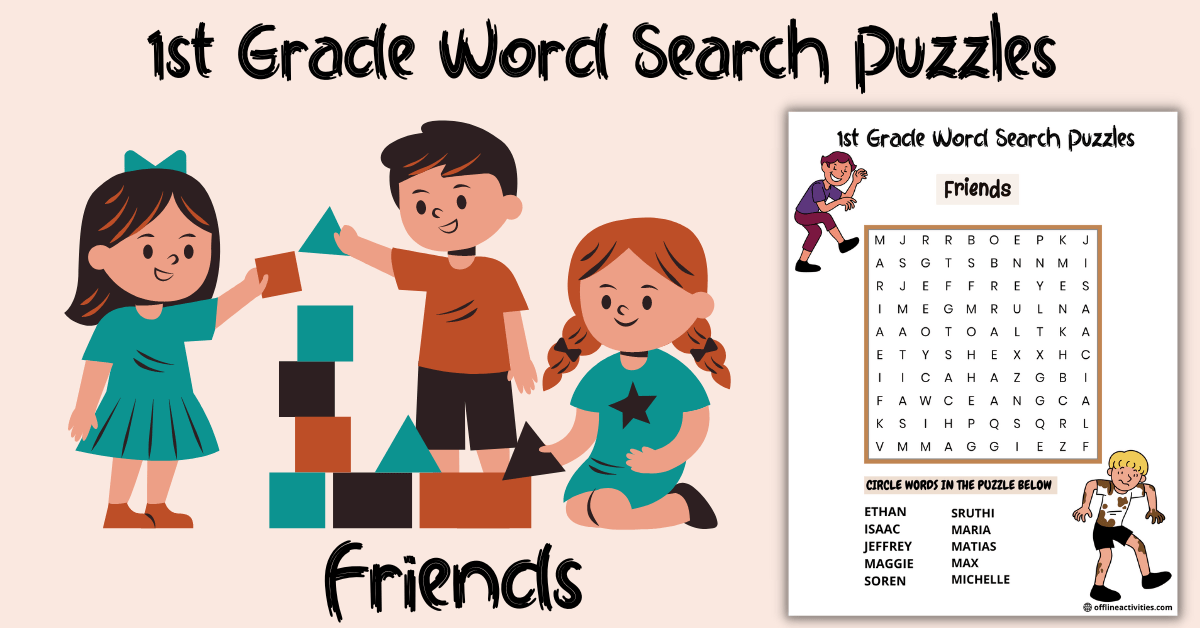
During a quiet independent work period, a teacher notices something encouraging happening at one of the tables. A group of first graders who usually rush through assignments are taking their time, carefully scanning a page filled with letters. One child quietly points to a name and smiles, another whispers the word aloud to check if it sounds right. The activity in front of them is a friendship-themed word search puzzle, and it has naturally slowed the room into focused learning. Classroom moments like this show how simple printables can support spelling and vocabulary without pressure. This article explores how friendship-themed word search puzzles help first graders build language skills while staying calm, engaged, and confident.
Why This Activity Works
Word search puzzles are especially effective in first grade because they support learning through repetition and recognition rather than memorization alone. Children encounter words multiple times as they scan the grid, match letter patterns, and confirm spelling from the word list.
This activity helps develop:
• Visual attention and scanning skills
• Vocabulary recognition and spelling awareness
• Reading confidence through familiar names
• Problem-solving and persistence
• Fine-motor skills through circling or highlighting
In classroom observations, teachers often notice that students remain focused longer when working on paper-based puzzles compared to screen activities. Screen-free learning reduces distractions and allows children to work at a steady, comfortable pace. Many educators report that quiet, hands-on tasks like word searches help students feel successful, especially those who may struggle with traditional spelling worksheets.
Print Puzzle
How to Use the Activity
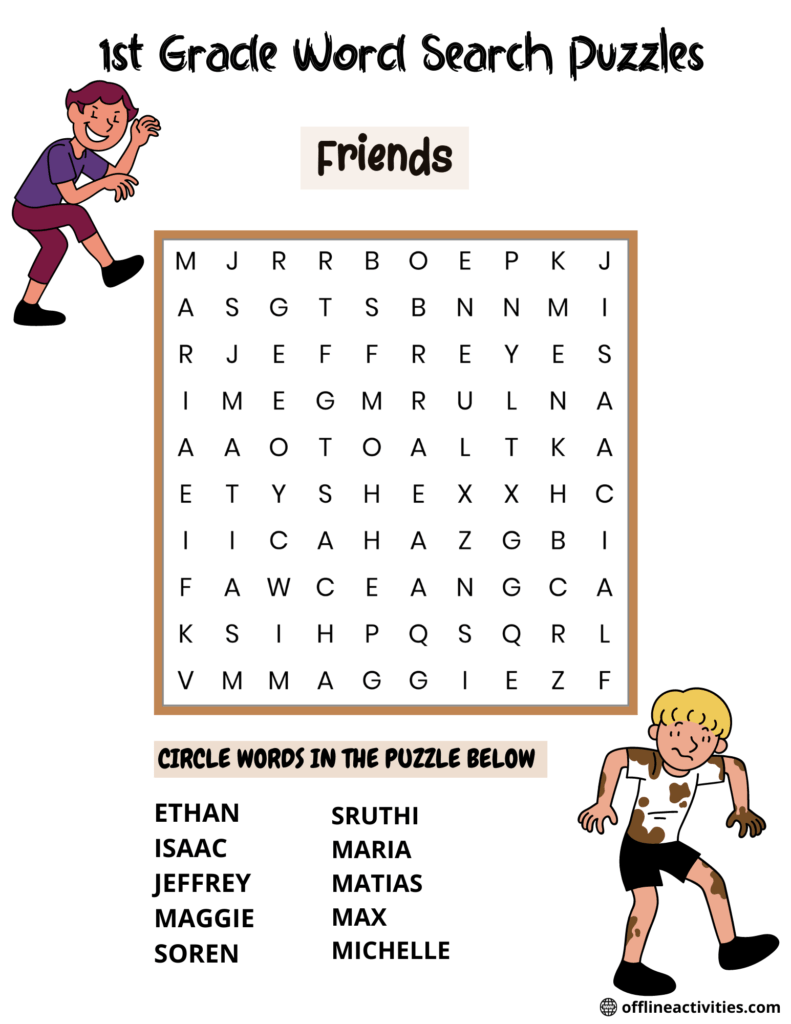
Begin by downloading and printing the worksheet. The puzzle is designed with clear spacing and readable letters suitable for first-grade learners. It can be used with pencils, crayons, or colored markers.
In the classroom, teachers often introduce the activity by reading the word list aloud together. This helps students hear correct pronunciation and recognize familiar names. At home, parents can ask their child if they recognize any of the names or if they know someone with a similar name.
The vocabulary words included in this puzzle are:
ETHAN
ISAAC
JEFFREY
MAGGIE
SOREN
SRUTHI
MARIA
MATIAS
MAX
MICHELLE
Encourage children to work slowly and carefully. There is no need to rush. Teachers frequently remind students that careful looking is more important than speed.
Ways to adapt the activity:
• Beginning learners can search for five words instead of all ten
• Confident readers can complete the puzzle independently
• Advanced learners can write the names in alphabetical order or use them in simple sentences
Fun extensions include asking students to clap syllables in each name, count letters, or draw a picture of a “classroom friend” using one of the names. These small activities add depth without turning the task into extra work.
Educational Foundations
This activity reflects real classroom experience. Teachers regularly use name-based word searches during literacy centers, social-emotional learning blocks, or the start of the school year. Children naturally connect with names, which increases motivation and reduces anxiety around spelling practice.
From an educational expertise perspective, word search puzzles strengthen orthographic mapping, a critical process where children store written words in memory for quick recognition. This supports both reading fluency and spelling accuracy.
The activity aligns with Montessori-inspired independent work, active learning strategies, and kinesthetic learning principles. Students interact physically with the page, reinforcing learning through movement and repetition. The content is age-appropriate, safe, and fully screen-free, making it a trustworthy tool for both classrooms and homes.
Word Search Puzzles vs Other Vocabulary Activities
Word Search Puzzles
Promote calm, sustained focus
Support spelling and word recognition
Encourage independent learning
Build fine-motor and visual skills
Low-pressure learning environment
Flashcards or Digital Games
Often fast-paced
Less problem-solving involved
Limited handwriting practice
Higher distraction risk
Frequently Asked Questions
What age group is this activity best for?
This puzzle is designed for children aged 5–7, especially first graders developing spelling and vocabulary skills.
Can teachers use this in the classroom?
Yes. It works well during literacy centers, independent work time, or as a quiet early-finisher activity.
Is this suitable for ESL learners?
Yes. The visual format and familiar names help ESL learners practice letter recognition and pronunciation without pressure.
How long does the activity usually take?
Most students complete the puzzle in 10–15 minutes, depending on focus and reading confidence.
How can I make the activity more engaging?
Allow students to use colored pencils, read words aloud, or pair up briefly to check answers together.
Does this activity support social-emotional learning?
Yes. Using a friends theme helps children feel connected and comfortable while practicing academic skills.
Conclusion
In first-grade classrooms, meaningful learning often happens during quiet, focused moments. Friendship-themed word search puzzles create exactly that kind of environment. By combining vocabulary practice with familiar names and gentle problem-solving, this printable supports confidence, focus, and early literacy development. Whether used in the classroom or at home, it offers a calm, screen-free way to reinforce spelling and reading skills. Download this printable and create a focused, enjoyable learning moment for your child or students today.
MORE PUZZLES FOR YOU:
Word Search Puzzles- Welcome to First Grade!

Printable Word Search Puzzles- spelling Word
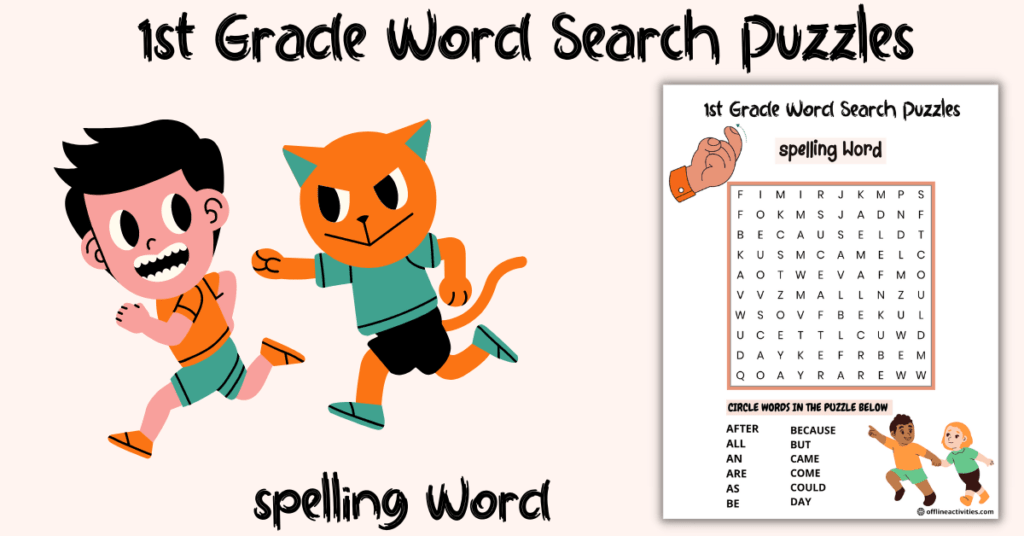
Puzzle Find the Words- spelling Word