How to Use This Community-Building Word Search
This puzzle can be a cornerstone activity for the first month of school, fostering both academic and social growth. Here’s how to introduce it with intention.
Simple Preparation:
Download the clear, welcoming PDF. For a special classroom community board, print it on colorful paper. To make it a reusable center activity or a take-home practice sheet, place it in a plastic sheet protector. Students can then use dry-erase markers, allowing for repeated engagement with their new friends’ names.
Guiding the Experience with Care:
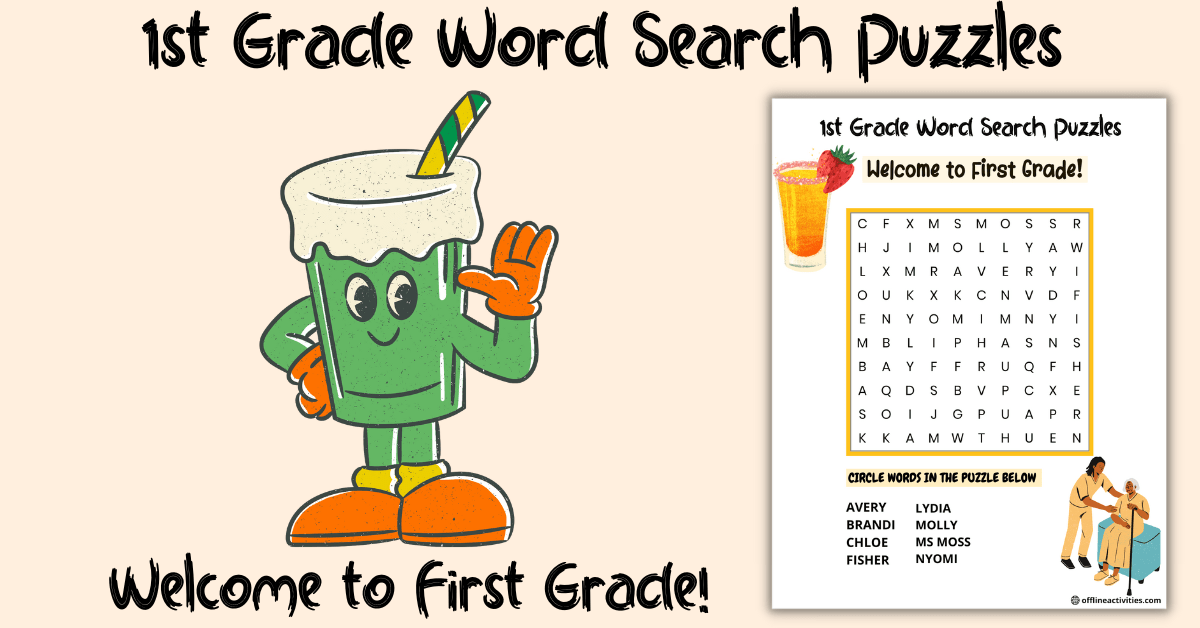
Begin by reading the list of names together in a warm, inclusive tone. You might say, “Let’s meet our new word friends! Some might be the names of friends in our class, and others might be new to us.” Then, choose one name to find together, perhaps one that starts with a distinctive letter like “Molly.” Model a supportive search strategy: “Molly starts with a big ‘M.’ Let’s scan each row for that letter first.” Your role is the encouraging guide. Use language that celebrates persistence and peer support: “I saw you help Sam find ‘Avery’—that was such a kind thing to do,” or “You looked in every single row for ‘Nyomi’ and you found it!”
Adapting for Different Learners and Settings:
-
For Building Early Confidence: Start with just 3-4 shorter names or names with very different starting letters, like “Chloe,” “Lydia,” and “Fisher.” You can place a small, colorful sticker next to the first letter of these names in the grid as a friendly visual cue.
-
For First Graders Building Fluency: Use the full puzzle. To add a phonics component, ask students to group the names they find by their first sound after completing the search.
-
For Extended Community Building: In a classroom, after a student finds a name, they could deliver the completed puzzle to that classmate as a “friendship find.” At home, use it as a conversation starter about making new friends.
Creative Extension Ideas:
-
Name Story Creation: After finding several names, challenge children to create a silly spoken story that includes them. “Avery and Chloe went fishing with Fisher. They met Ms. Moss and Molly along the way!”
-
Sound Sorting: Once the puzzle is complete, sort the names. Which names start with a consonant blend (BR in Brandi)? Which have a long vowel sound (Ly in Lydia)?
-
“All About Me” Connection: Pair this activity with a simple drawing page. As children find a name, they draw something they learned about or imagine that person might like.
The Educational Foundations Behind the Activity
I’ve used name-based activities for years in my early-grade classrooms, and their power to unify a group is remarkable. During independent work time, you’ll hear whispers of, “I found your name!”—a small interaction that builds the social fabric of the room. Academically, it allows me to see who can transfer letter knowledge from their own name to recognizing patterns in others’ names.
From a linguistic perspective, this puzzle is excellent for orthographic processing. Names often contain common phonetic patterns and sight word chunks (like “and” in Brandi, “ly” in Molly) that children will encounter in their reading. It makes abstract phonics concrete. The activity also engages working memory as they hold a multisyllabic name like “Avery” in mind while searching.
This approach is deeply connected to constructivist learning and social-emotional learning (SEL) frameworks, where academic skills are built within the context of community and relationship. It aligns with Montessori principles of using meaningful, real-world words as the basis for language work. Parents and teachers can trust this as a safe, positive, and inclusive resource that respects each child’s identity while building foundational literacy in a calm, screen-free way.
Skill Development: Name Recognition vs. Isolated Word Practice
Frequently Asked Questions
What if a child’s name isn’t in the puzzle?
This is a wonderful opportunity for inclusivity. You can explain that this puzzle has one set of names, and that next week we might have a different set. Encourage them to be a “name detective” for their friends. You can also provide a blank grid for them to create their own mini-name search featuring their name and a few others.
Can this be used in a homeschool or small group setting?
Absolutely. It’s perfect for these environments. You can even customize it further by easily creating your own version with the names of family members, friends, or literary characters your child loves.
My child struggles with longer names. How can I help?
Break it down syllabically. For “Avery,” you might say, “Let’s look for ‘Ave’ first, then check if ‘ry’ comes right after.” This teaches a powerful decoding strategy for longer words they’ll encounter in reading.
How does this activity support writing?
By visually cementing the correct spelling of these names, it builds a bank of words children are highly motivated to write correctly when making cards, labels, or stories about their friends.
Is this primarily a beginning-of-the-year activity?
While it’s incredibly powerful for the first weeks, it can be reused throughout the year as a comforting review activity or as a way to celebrate a “Star Student” week by featuring that child’s name in a new puzzle.
Do you have other community-building or SEL printables?
We offer a variety of resources designed to build social skills, emotional awareness, and classroom community, all through the lens of calm, screen-free activities that respect young learners.
Building the Foundation for a Connected Classroom
The first days of school are about more than letters and numbers; they are about building a community where every child feels seen and capable. An activity like this first grade name word search honors both goals simultaneously. It tells a child that their identity matters in this new space and that they have the skills to navigate it. Each name found is a small celebration of both literacy and friendship.
We invite you to download this printable and use it as a heartwarming launchpad for your school year. It’s a simple, thoughtful way to weave together the essential threads of learning and connection, setting the stage for a year of confident growth.