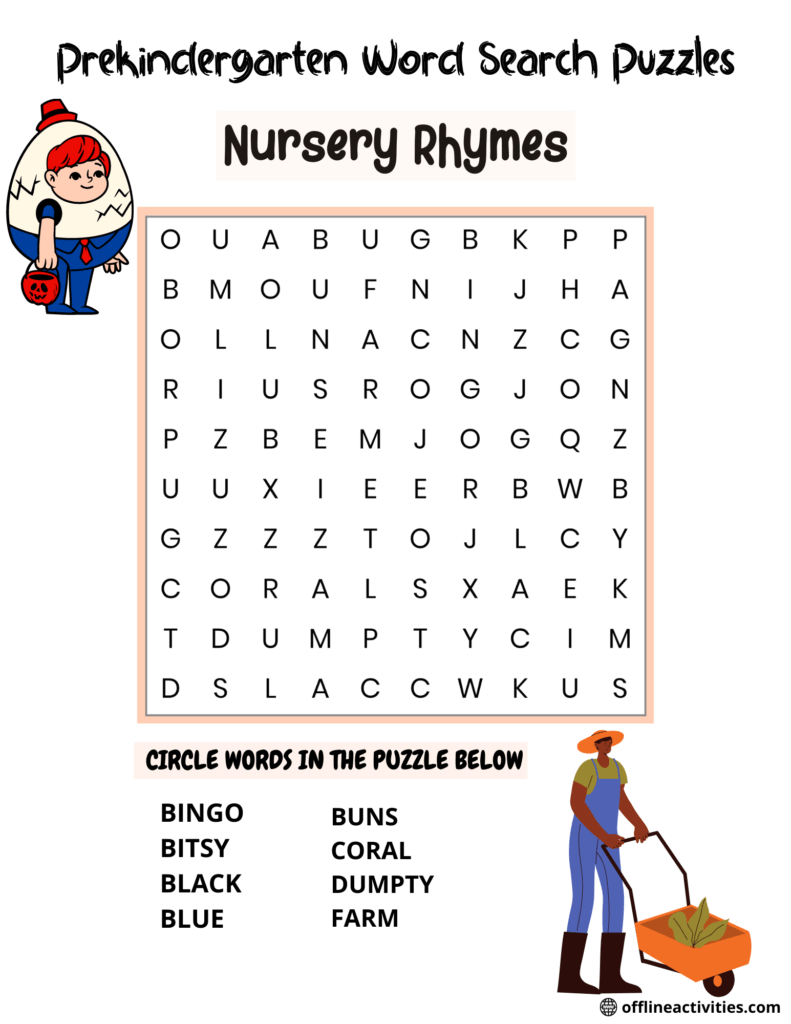
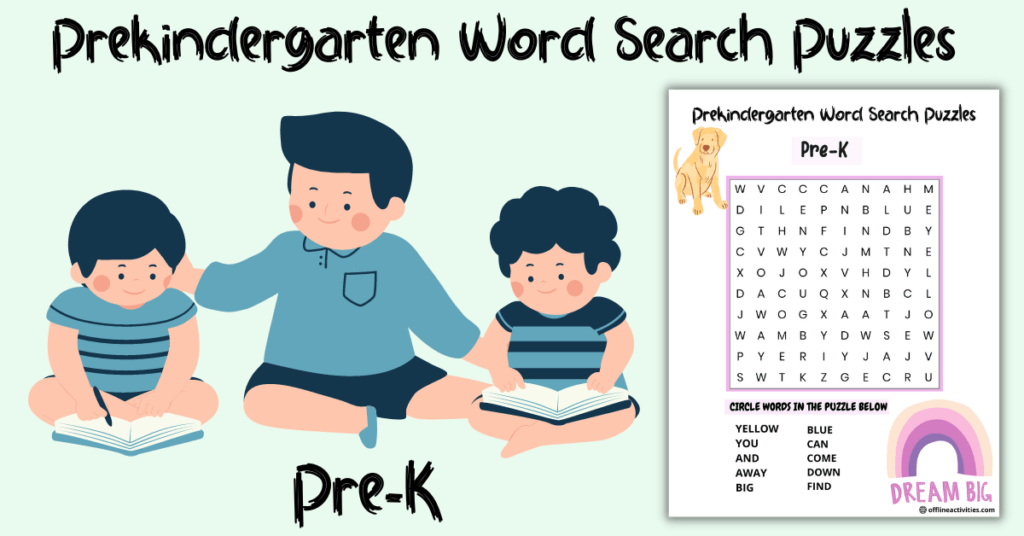
These words introduce children to familiar rhythmic language patterns that often appear in nursery rhymes and storytelling traditions.
How to Use the Activity
This printable rhyming puzzle can be used both at home and in early childhood classrooms. The activity is simple to prepare and flexible enough for different learning styles.
Begin by downloading the worksheet and printing it on standard letter-size paper. Printing at full size helps ensure that the words and puzzle elements are easy for young children to see.
Before starting the puzzle, read each vocabulary word aloud with the child. Encourage them to repeat the words and listen carefully to the sounds at the end of each word. This step helps children focus on the phonemic patterns they will be identifying.
Next, guide the child through the puzzle. Explain that the goal is to find and match words that rhyme or share similar sounds.
Some children may recognize rhymes quickly, while others may need time to hear the similarities. Offer gentle hints by slowly pronouncing the words and emphasizing the ending sounds.
You can adapt the activity based on the child’s age and experience level.
For children aged 3–4, work together to identify one or two rhyming pairs. Keep the atmosphere relaxed and playful.
For children aged 5–6, encourage them to search independently for rhyming pairs and then say the words aloud once they find them.
For children aged 7–8, you can extend the activity by asking them to think of additional rhyming words related to the puzzle.
There are also several creative ways to expand the learning experience. Children can draw pictures representing one of the rhyming words, create a short rhyme using two puzzle words, or invent their own silly rhyming phrases. These playful extensions strengthen both imagination and language skills.
Educational Foundations
Rhyming activities are widely used in early childhood education because they support essential pre-reading skills.
From an experience perspective, teachers often include rhyming puzzles during literacy centers or small-group language activities. Children enjoy the musical quality of rhyming language, which makes learning feel natural and enjoyable.
From an expertise standpoint, phonemic awareness is one of the strongest predictors of early reading success. When children can recognize and manipulate sounds in words, they develop the auditory skills needed for decoding and spelling.
Rhyming puzzles also reflect principles found in Montessori and active learning approaches. These methods emphasize hands-on exploration, allowing children to discover patterns and relationships independently.
The activity also supports kinesthetic learning. Even though the puzzle is quiet and calm, children remain physically engaged by circling, matching, or highlighting words. This interaction helps reinforce memory and concentration.
Most importantly, the activity is safe, age-appropriate, and screen-free. Parents and teachers can confidently use printable worksheets knowing that the focus remains on meaningful learning and gentle skill development.
Rhyming Puzzles vs Flashcards for Early Literacy
Learning Factor | Rhyming Puzzle Worksheet | Flashcards
Language exploration | Encourages discovery of sound patterns | Focuses mainly on memorization
Engagement level | Puzzle format feels like a game | Repetition can feel routine
Visual scanning | Strengthens letter recognition | Limited visual search activity
Fine motor practice | Children circle or match words | Minimal writing or tracing
Learning pace | Calm and self-guided | Often teacher-directed
Both tools can support early learning, but puzzles often feel more playful and exploratory for young children.
Frequently Asked Questions
What age group is this rhyming puzzle designed for?
This activity works best for children aged 3 to 8. Younger children may need help recognizing rhyming sounds, while older children can complete the puzzle more independently.
Can teachers use this activity in a preschool classroom?
Yes. Rhyming puzzles are excellent for literacy centers, phonics practice, or small-group language lessons. They provide a quiet activity that reinforces sound awareness.
Is this puzzle helpful for children learning English as a second language?
Yes. Rhyming activities help ESL learners notice sound patterns in English words. Hearing and repeating rhymes strengthens pronunciation and listening skills.
How long does the activity usually take?
Most children complete the puzzle within 5 to 10 minutes. Younger learners may spend a little longer if they are practicing the pronunciation of each word.
How can I make the puzzle more interactive?
You can turn the activity into a game by asking children to clap when they hear two rhyming words or by creating silly rhyming sentences together.
Can this activity be used during quiet time?
Yes. Because it requires concentration and gentle thinking, rhyming puzzles work very well during quiet learning periods at home or in the classroom.
Conclusion
Rhyming puzzles provide a gentle and enjoyable way for children to explore the sounds of language. By identifying words that share similar endings, children strengthen phonemic awareness, listening skills, and early reading confidence.
Printable activities like this also offer something many families and educators value: a calm moment of learning away from screens. With just a printed worksheet and a pencil, children can explore language patterns, practice new vocabulary, and develop skills that support their future reading journey.
Download this Printable rhyming puzzle and enjoy a simple, screen-free learning moment with your child today.