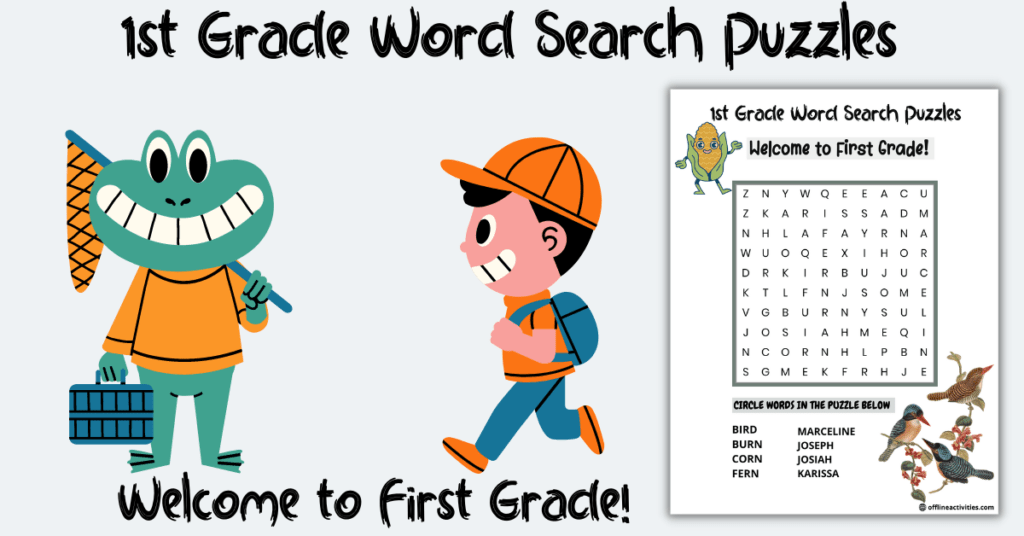

During a literacy block in a first-grade classroom, a teacher notices a familiar challenge. Some students confidently read simple sentences, while others pause often, still working to recognize common words like “and,” “can,” or “have.” To support the whole group without creating pressure, the teacher hands out printed word search puzzles instead of another worksheet. The change is immediate. Students lean over their papers, quietly scanning letters, circling words they recognize, and gaining small moments of success. This classroom observation highlights why word search games can be so effective in early grades. These free first-grade word search puzzles are designed to help children practice essential sight words in a calm, engaging, and screen-free way.
Why This Activity Works
Word search puzzles work particularly well for first graders because they focus on recognition rather than memorization. At this stage, children benefit from repeated exposure to high-frequency words in a non-stressful format. Instead of writing words from memory or reading long passages, students visually locate familiar words within a grid.
This activity helps develop several foundational skills:
• Visual scanning and sustained focus
• Sight word recognition
• Early spelling awareness
• Problem-solving and perseverance
• Fine-motor control through circling or marking words
Screen-free learning is especially important for young children. Without animations, sounds, or time limits, students can concentrate fully on the task. Teachers often observe that children who struggle with traditional spelling drills feel more relaxed and confident when working with printed puzzles. Educational studies consistently show that hands-on, paper-based activities help young learners maintain attention longer and retain vocabulary more effectively.
Print Puzzle
How to Use the Activity
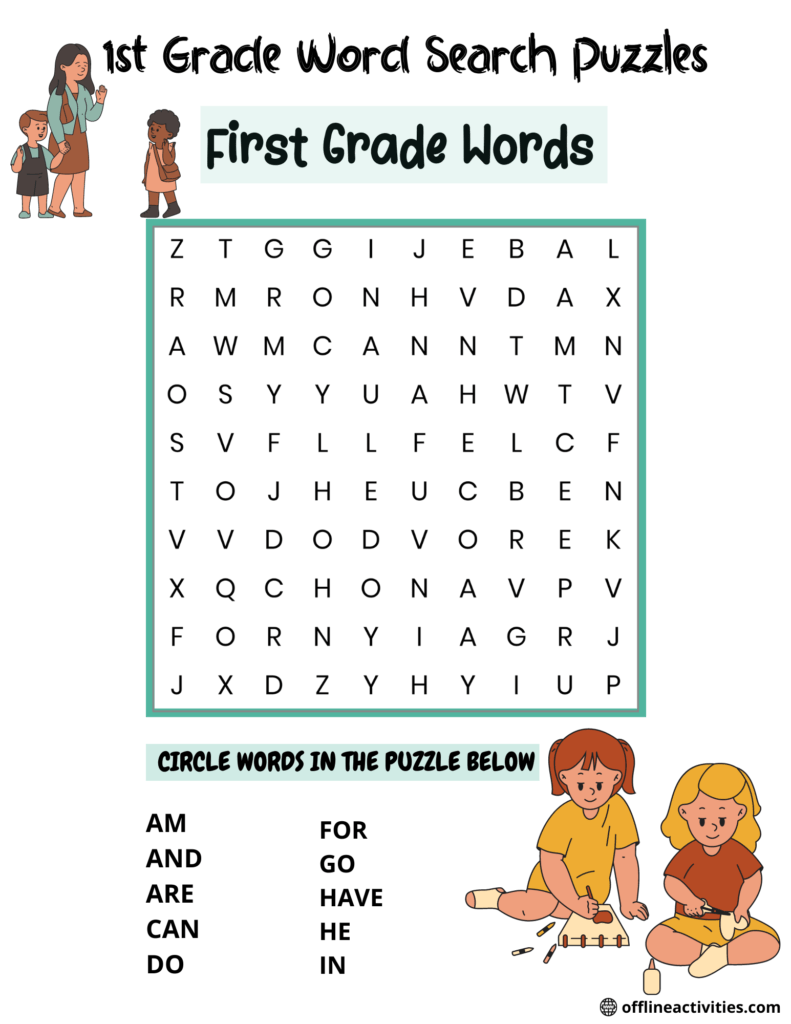
To begin, download and print the worksheet. The puzzle is provided as a simple PDF, making it easy to use in both classrooms and homes. The layout is clear and uncluttered, with letters sized appropriately for first-grade learners.
In the classroom, teachers often start by reviewing the word list aloud with students. This short discussion helps children hear the words clearly and connect them to meaning. At home, parents can sit nearby and ask their child if they recognize any of the words before starting.
The vocabulary words included in this puzzle are:
AM
AND
ARE
CAN
DO
FOR
GO
HAVE
HE
IN
Encourage children to work slowly and carefully. Remind them that it is okay to look back at the word list as often as needed. The goal is recognition and confidence, not speed.
Ways to adapt the activity for different learners:
• Emerging readers can search for three or four words at a time
• Confident readers can complete the entire puzzle independently
• Advanced learners can write a simple sentence using two or three of the words
Fun extension ideas include asking students to read each word aloud after finding it, sort words by length, or highlight vowels in a different color. These small variations deepen language understanding while keeping the activity enjoyable.
Educational Foundations
This activity is grounded in real classroom experience. Teachers frequently use word search puzzles during literacy centers, morning work, or as a quiet early-finisher task. Students often remain focused longer than they would with flashcards or repetitive drills.
From an educational expertise perspective, word searches support orthographic mapping, the brain’s process of storing written words for instant recognition. This skill is essential for reading fluency and comprehension. Repeated visual exposure helps children recognize sight words quickly in books and classroom texts.
The activity aligns with Montessori-inspired independent work, active learning approaches, and kinesthetic learning principles. Children interact physically with the page, reinforcing learning through movement and repetition. It is age-appropriate, safe, and fully screen-free, making it a trustworthy learning tool for parents and educators alike.
Printable Word Search Worksheets vs Screen-Based Games
Printable Word Search Worksheets
Encourage calm, sustained focus
Support sight word recognition
Build fine-motor and handwriting skills
Low-distraction learning environment
Easy to reuse and adapt
Screen-Based Learning Games
Often fast-paced
Shorter attention spans
Limited handwriting practice
Higher risk of distraction
Frequently Asked Questions
What age group is this activity designed for?
This word search puzzle is best suited for children aged 5–7, especially first graders learning common sight words.
Can teachers use this in the classroom?
Yes. It works well for literacy centers, independent practice, review sessions, or as a calm early-finisher activity.
Is this suitable for ESL learners?
Absolutely. The visual format helps ESL learners recognize high-frequency words without pressure.
How long does the activity usually take?
Most children complete the puzzle in 10–15 minutes, depending on focus and familiarity with the words.
How can I make this activity more engaging?
Allow children to use colored pencils, read words aloud, or create a short sentence using one of the words.
Does this activity require special materials?
No. A printed worksheet and a pencil or crayon are all that is needed.
Conclusion
In first-grade classrooms, learning is often most effective when it feels calm and achievable. These free word search games offer children a gentle way to practice essential sight words while building focus, confidence, and early literacy skills. Whether used in the classroom or at home, this printable provides meaningful practice without screens or pressure. Download this word search puzzle and create a quiet, screen-free learning moment that supports your child’s reading journey today.
MORE PUZZLES FOR YOU:
Word Search Puzzles- Welcome to First Grade!

Word Search Printable- First Grade Words

1st Grade Word Search Puzzles- Welcome to First Grade