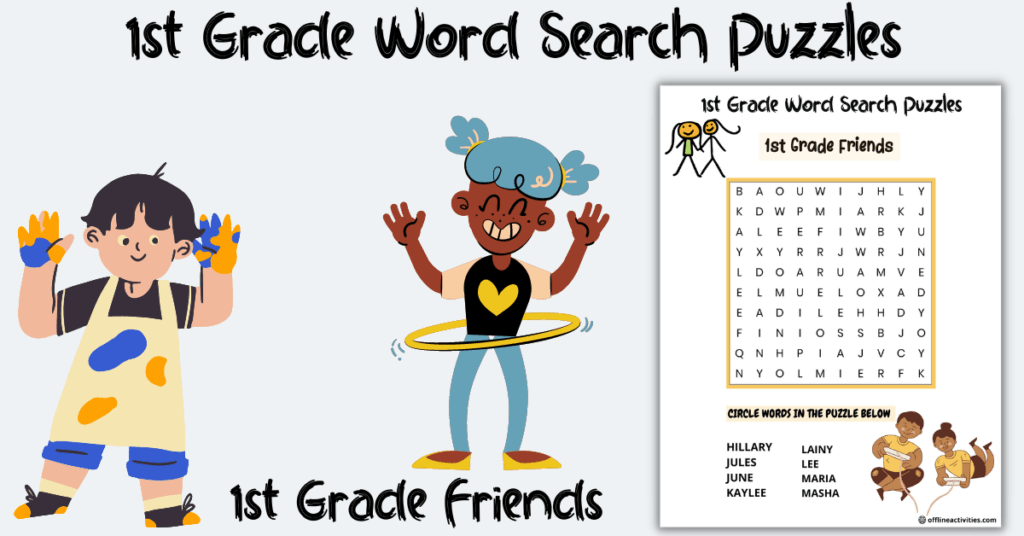
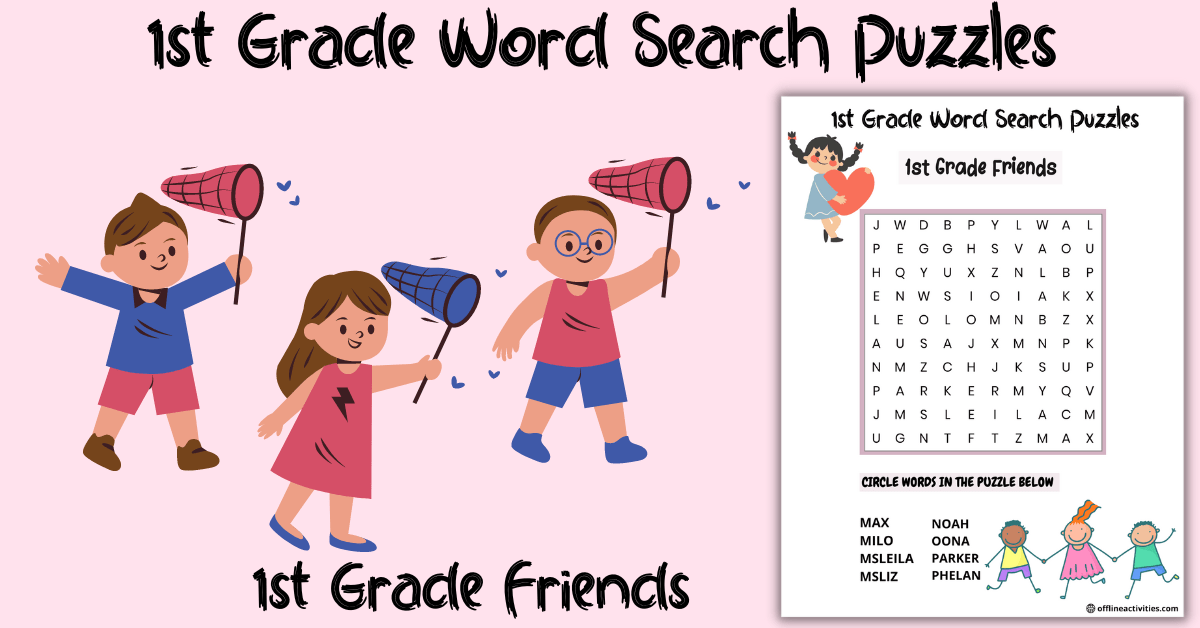
The bell has already rung, and the class has settled into a quiet activity. Some students are still adjusting in their seats, others are flipping pages, but a small group has already begun working. One child traces a finger across the grid, whispering letters under their breath. Another pauses, checks the word list again, then smiles when a name finally appears. During moments like this, teachers often see a shift: anxiety fades, focus increases, and learning feels manageable. This first-grade vocabulary word search was created for exactly these classroom moments, where children can practice new words in a way that feels calm, familiar, and encouraging. In this article, you’ll see how this activity supports early vocabulary growth and how it can be used both in school and at home.
Why This Activity Works
In early elementary classrooms, vocabulary practice can sometimes feel overwhelming for young learners. Word search puzzles offer a gentler alternative by turning practice into a focused visual task. As children search for words, they are not only recognizing letters but also building connections between spelling and meaning.
This activity helps develop:
• Vocabulary recognition and early spelling accuracy
• Focus and sustained attention
• Problem-solving through visual scanning
• Fine-motor skills through circling or marking words
• Confidence from completing a task independently
Screen-free activities like this are especially valuable in first grade. When children work on paper, they are less distracted and more aware of the learning process. Many educators observe that hands-on printables encourage longer periods of concentration than digital games, especially for children who are still developing attention control.
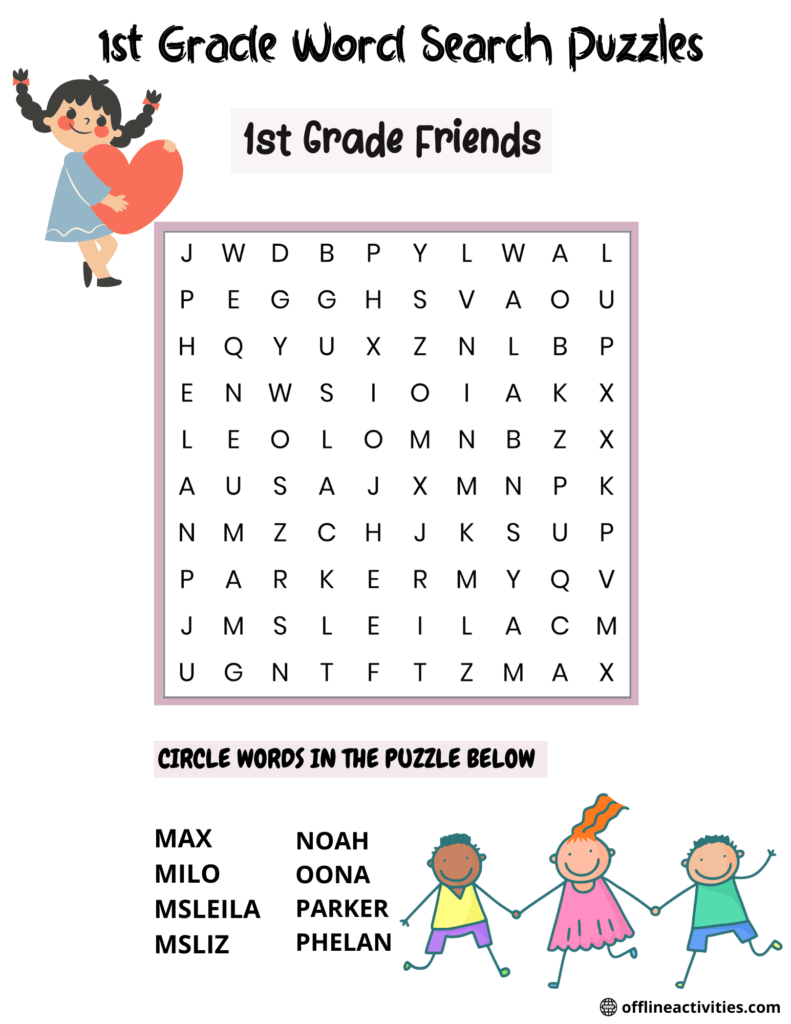
Print Puzzle
How to Use the Activity in the Classroom or at Home
To get started, download and print the worksheet on regular paper. Teachers often print several copies for classroom use, while parents may keep a few on hand for home learning or travel.
Before children begin, it helps to introduce the words together. The vocabulary included in this puzzle is:
MAX
MILO
MSLEILA
MSLIZ
NOAH
OONA
PARKER
PHELAN
Reading the words aloud helps children become familiar with how they look and sound. In a classroom, this may be a short group discussion. At home, parents can simply ask which names sound familiar or interesting.
During the activity, encourage children to take their time. There is no need to rush. Teachers often walk quietly around the room, offering reassurance rather than answers. At home, sitting nearby can help children feel supported while still working independently.
To adapt the activity:
• Younger learners can search for just a few words at a time
• Developing readers can complete the full puzzle independently
• More confident students can write each word neatly after finding it
For added engagement, children can sort the names by length, practice writing them, or use two names in a short spoken sentence. These small extensions add depth without increasing pressure.
Educational Foundations You Can Trust
This activity is based on real classroom experience. Teachers frequently use word search puzzles during literacy centers, morning work, or quiet transition periods because students respond positively. Children who may hesitate during reading tasks often show more confidence when working with puzzles.
From an expertise perspective, word searches support orthographic mapping, visual memory, and attention skills. They also reinforce early spelling patterns in a low-stress format.
The structure aligns with Montessori-inspired independent learning, where children choose calm, purposeful work and progress at their own pace. Active learning and kinesthetic development are supported as children physically interact with the worksheet. Most importantly, this printable is age-appropriate, screen-free, and safe for repeated use in classrooms or homes.
Printable Word Searches vs Screen-Based Activities
Printable Word Search Worksheets
Encourage steady focus
Support vocabulary and spelling development
Strengthen fine-motor skills
Reduce overstimulation
Fit naturally into classroom routines
Screen-Based Activities
Often fast-paced
Shorter attention spans
Limited handwriting practice
Higher distraction risk
Frequently Asked Questions
What age is this activity best for?
This word search is ideal for children aged 5–8, particularly first graders building early vocabulary skills.
Can teachers use this in the classroom?
Yes. It works well for literacy centers, quiet work time, early finisher tasks, or small-group learning.
Is this activity suitable for ESL learners?
Yes. Name-based vocabulary and repeated visual exposure help English language learners practice recognition and confidence.
How long does the activity usually take?
Most children complete the puzzle in about 10–15 minutes, depending on focus and familiarity with the words.
How can I make the activity more engaging?
You can add coloring, name-sorting activities, or simple writing extensions after the puzzle is complete.
What if a child feels frustrated?
Reduce the number of words, search together briefly, or pause and return later. The goal is confidence, not speed.
Conclusion
First grade is a big step in a child’s learning journey, and vocabulary growth takes time and patience. Classroom observations show that word search puzzles offer a calm, supportive way for children to practice new words without feeling overwhelmed. This printable activity creates space for focus, confidence, and steady progress, whether used at school or at home. By giving children a quiet, screen-free opportunity to explore vocabulary, we help build strong foundations for reading and language development. Download this printable and add a peaceful, confidence-building moment to your child’s learning routine today.
MORE PUZZLES FOR YOU:
Word Search Large Print Free Printable- 1st Grade Friends
1st Grade Word Search Puzzles- Friends
Word Search Game Online for Free- 1st Grade Friends