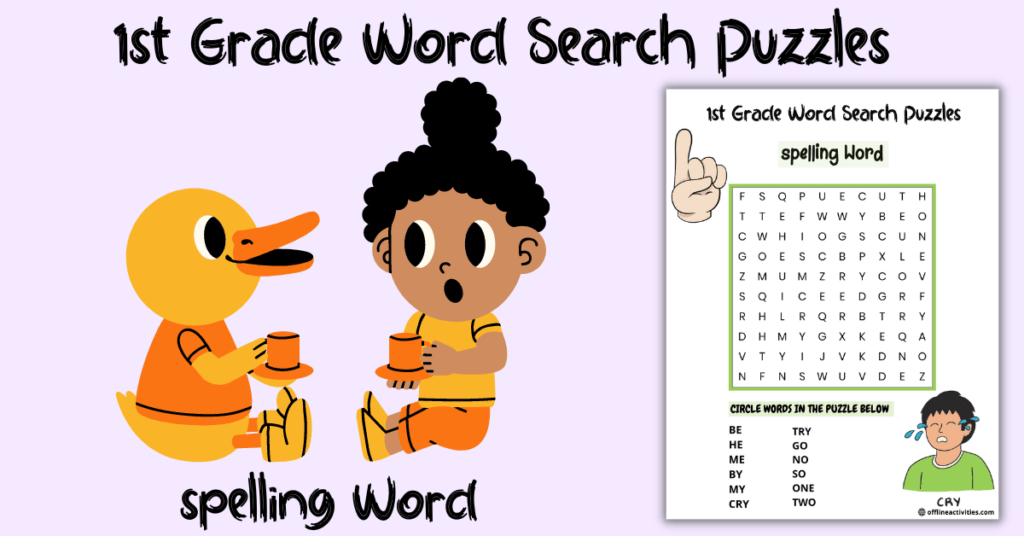
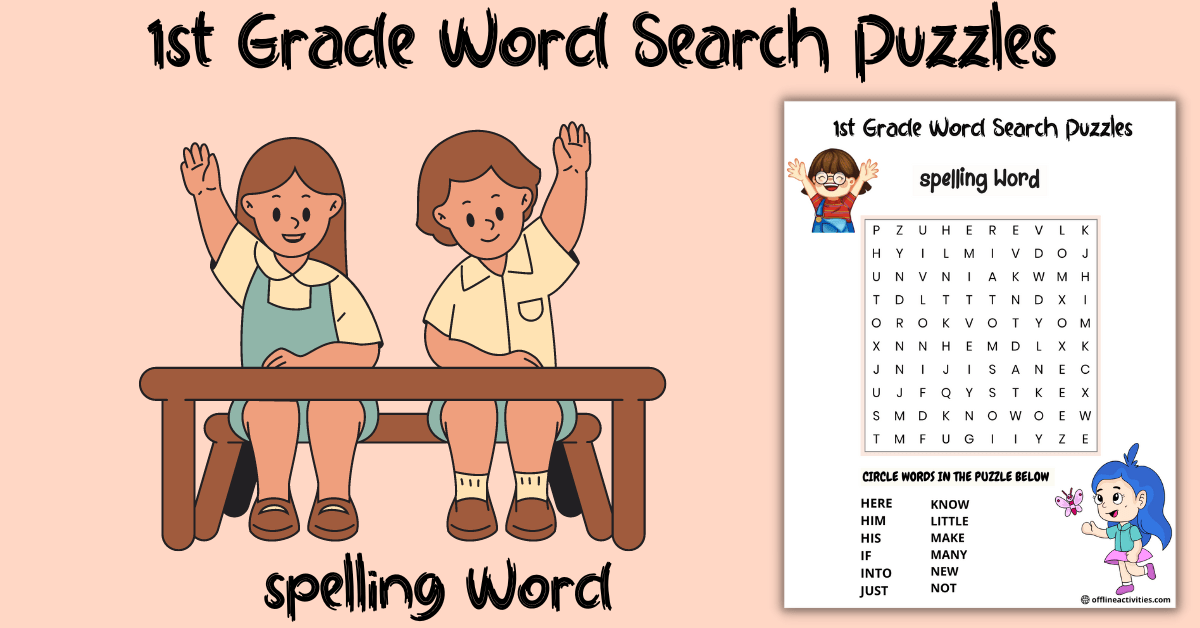
During a reading block, a teacher pauses near a small group of first graders who are still warming up to independent reading. Some students finish quickly, while others hesitate, unsure of the words on the page. To bridge that gap, the teacher places a printed word search puzzle on the table. Almost immediately, the atmosphere changes. Students lean in, quietly scanning letters, pointing out words they recognize, and helping each other stay on track. This simple classroom moment highlights how the right printable activity can support early literacy without pressure. In this article, you’ll explore how first-grade word search puzzles help children strengthen spelling, reading, and word recognition skills in a calm, engaging way.
Why This Activity Works
Word search puzzles are effective in first grade because they reinforce reading skills through repetition and visual recognition rather than memorization alone. Children are exposed to words multiple times as they scan, confirm letter patterns, and match them to a list.
This activity supports key learning skills such as:
• Focus and visual attention
• Word recognition and early spelling awareness
• Reading fluency and confidence
• Problem-solving and persistence
• Fine-motor development through circling or marking words
Screen-free learning plays an important role at this stage. Without animations or time limits, children can move at their own pace. Teachers often observe that students who feel overwhelmed during traditional reading exercises are more relaxed and engaged when working with paper-based puzzles. Educational research consistently shows that hands-on literacy activities support stronger concentration and better retention in early learners.
Print Puzzle
How to Use the Activity
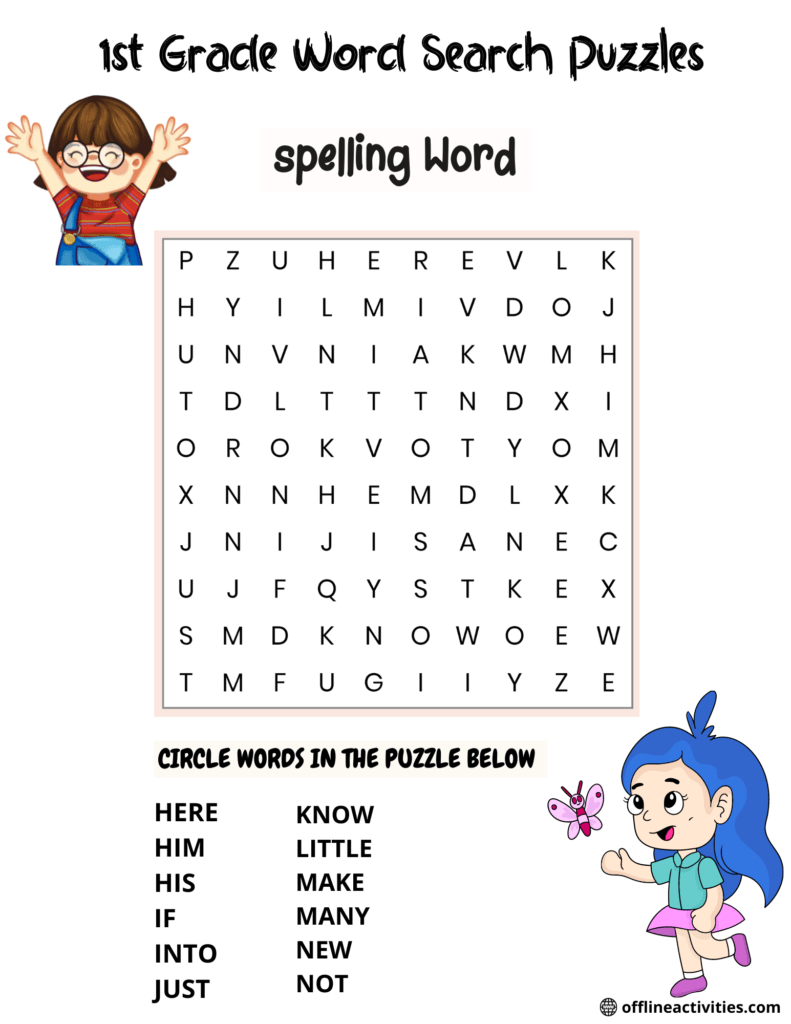
Begin by downloading and printing the worksheet. The layout is designed with first graders in mind, using clear fonts and adequate spacing. The puzzle can be used with pencils, crayons, or highlighters.
In a classroom setting, teachers may introduce the activity by reading the word list aloud together. At home, parents can sit nearby and encourage children to sound out words they recognize.
The vocabulary words included in this puzzle are:
HERE
HIM
HIS
IF
INTO
JUST
KNOW
LITTLE
MAKE
MANY
NEW
NOT
Children should be encouraged to scan the grid slowly and carefully. There is no need to complete the puzzle quickly. Teachers often remind students that careful looking is part of learning.
To adapt the activity by age or skill level:
• Beginners can focus on finding four or five words
• Confident readers can complete the entire puzzle independently
• Advanced learners can write sentences using two or three of the words
Fun extensions include asking students to read each word aloud, sort words by length, or identify sight words they already know. These additions deepen understanding while keeping the activity enjoyable.
Educational Foundations
This activity reflects real classroom experience. Teachers regularly use word search puzzles during literacy centers, early-finisher time, or as a calm transition between lessons. Students often remain engaged longer than with flashcards or worksheets that require constant correction.
From an expertise standpoint, word searches strengthen orthographic mapping—the brain’s ability to store written words for instant recognition. This process is essential for reading fluency and spelling accuracy.
The activity aligns with Montessori-inspired independent work, active learning strategies, and kinesthetic learning principles. Children interact physically with the page, reinforcing learning through movement. It is age-appropriate, safe, and designed for screen-free use, making it a trustworthy option for both educators and families.
Word Search Puzzles vs Other Literacy Tools
Word Search Puzzles
Encourage sustained focus
Support sight word recognition
Build spelling confidence
Low-stress, independent learning
Easy to adapt for different skill levels
Traditional Flashcards
Faster-paced
Less problem-solving involved
Limited fine-motor engagement
Can feel repetitive for some learners
Frequently Asked Questions
What age group is this activity best for?
This puzzle is designed for children aged 5–7, particularly first graders developing early reading and spelling skills.
Can teachers use this in the classroom?
Yes. It works well for literacy centers, independent practice, review sessions, or quiet early-finisher activities.
Is this suitable for children learning English as a second language?
Yes. The visual format helps ESL learners recognize common words and reinforce letter patterns without pressure.
How long does the activity usually take?
Most children complete the puzzle in 10–15 minutes, depending on focus and familiarity with the words.
How can I make the activity more engaging?
Allow children to use colored pencils, read words aloud, or create a short story using one of the words.
Does the puzzle include an answer key?
Many word search puzzles include a key, which helps children self-check and builds independence.
Conclusion
In classrooms, progress often happens quietly—when children feel confident, focused, and supported. These first-grade word search puzzles create that kind of learning environment. By combining spelling practice, reading reinforcement, and problem-solving in a familiar format, this printable helps children build essential literacy skills without stress. Whether used in the classroom or at home, it offers a calm, screen-free way to support early reading development. Download this printable and create a focused learning moment for your child or students today.
MORE PUZZLES FOR YOU:
Word Search Printable- First Grade Words

1st Grade Word Search Puzzles
1st Grade Word Search Puzzles- spelling Word