In one corner of a first-grade classroom, a teacher notices a familiar pattern during independent work time. Some students finish early and begin to fidget, while others need a gentle activity to reinforce new words without feeling overwhelmed. On this day, printed word search puzzles are placed on the tables. Almost immediately, the room settles. A student smiles after finding a familiar name, another carefully scans each row, and a third quietly checks their list before circling a word. These classroom moments show how simple printables can support learning without pressure. This word search activity was designed to provide that calm, focused practice while helping children strengthen vocabulary skills in a natural way.
Why This Activity Works
Word search puzzles are especially effective for young learners because they combine structure with freedom. Children know what they are looking for, but they control how they search. This balance builds confidence while encouraging persistence.
This activity supports several key skills:
• Visual scanning and sustained attention
• Vocabulary recognition and spelling awareness
• Early reading confidence
• Problem-solving and self-checking
• Fine-motor development through marking words
Screen-free activities like word searches allow students to engage deeply without distractions. In classroom observations, teachers often report that children who struggle during fast-paced lessons feel more successful when working with paper-based puzzles. Educational research consistently shows that hands-on, low-stimulation tasks help children focus longer and retain information more effectively during early literacy development.
Print Puzzle
How to Use the Activity
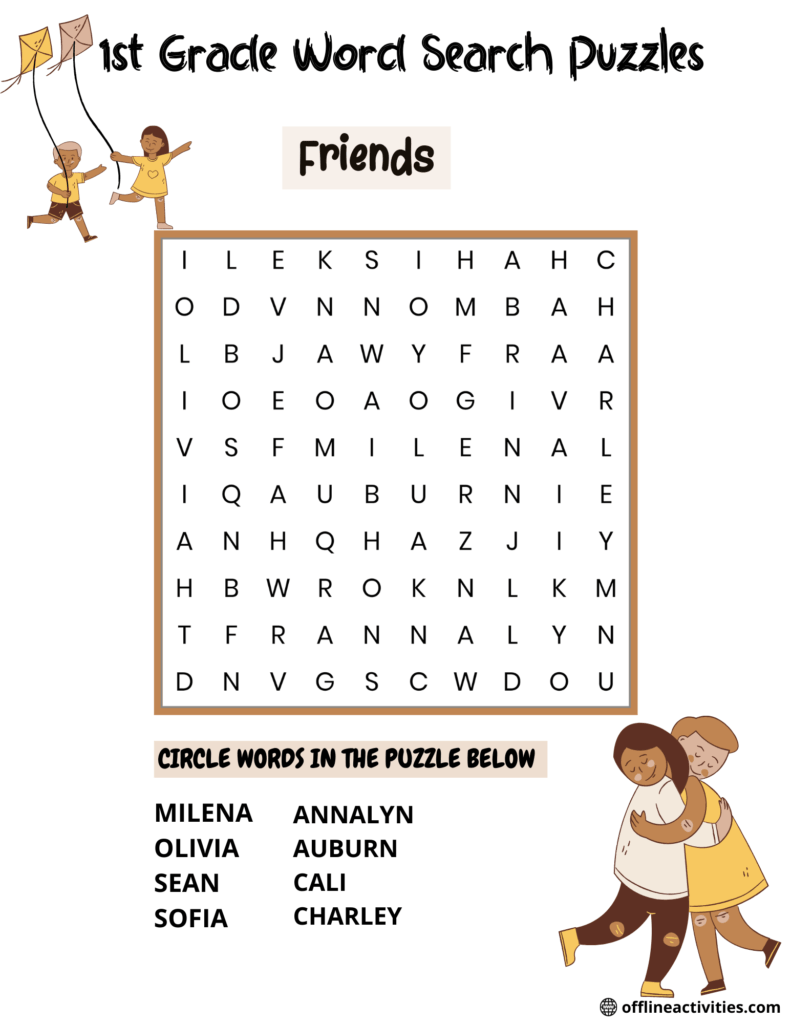
Begin by downloading and printing the worksheet. The puzzle is formatted with clear spacing and readable letters, making it suitable for first graders. It can be printed in black and white and used with pencils, crayons, or colored markers.
Before starting, review the word list together. In a classroom setting, this might be done as a short group discussion where students read the names aloud. At home, parents can ask if the child recognizes any of the names or has met someone with a similar name.
The vocabulary words included in this puzzle are:
MILENA
OLIVIA
SEAN
SOFIA
ANNALYN
AUBURN
CALI
CHARLEY
Encourage children to work slowly and carefully. Teachers often remind students that it is okay to pause, look again, and double-check their work. There is no expectation to finish quickly.
To adapt the activity by age or ability:
• Younger learners can search for two or three words at a time
• Confident readers can complete the puzzle independently
• Advanced learners can write each word neatly below the puzzle or alphabetize the list
Fun extensions include asking students to count letters, clap syllables, or choose one name and draw a character for it. These small additions turn a simple puzzle into a richer language experience.
Educational Foundations
This activity reflects real classroom experience. Teachers often use name-based word searches during the beginning of the year, literacy centers, or calm-down periods because children naturally connect with familiar words. That emotional connection increases engagement and reduces frustration.
From an educational expertise perspective, word search puzzles strengthen orthographic awareness—the ability to recognize letter patterns within words. This supports both spelling accuracy and reading fluency over time.
The activity aligns with Montessori-inspired independent work, active learning strategies, and kinesthetic development. Children interact physically with the page, reinforcing learning through movement and repetition. The content is age-appropriate, safe, and designed for screen-free use, making it a trustworthy option for both classrooms and homes.
Printable Word Search Puzzles vs Screen-Based Learning Tools
Printable Word Search Puzzles
Encourage calm, sustained focus
Support vocabulary and spelling retention
Build fine-motor and handwriting skills
Low distraction learning environment
Easy to adapt and reuse
Screen-Based Learning Tools
Often fast-paced
Shorter attention spans
Limited handwriting practice
Higher risk of overstimulation
Frequently Asked Questions
What age group is this activity designed for?
This puzzle is best suited for children aged 5–7, particularly first graders building early vocabulary skills.
Can teachers use this activity in the classroom?
Yes. It works well during literacy centers, independent work time, or as a quiet early-finisher task.
Is this suitable for ESL learners?
Yes. Visual word searches help ESL learners recognize letter patterns and practice pronunciation in a low-pressure setting.
How long does the activity usually take?
Most children complete the puzzle in 10–15 minutes, depending on focus and familiarity with the words.
How can I make this activity more engaging?
Allow children to use colored pencils, read words aloud, or create a short sentence using one of the names.
Can this worksheet be reused?
Yes. Laminating the page or placing it in a plastic sleeve allows repeated use with dry-erase markers.
Conclusion
In classrooms, some of the most meaningful learning happens quietly—when children are focused, relaxed, and working at their own pace. These word search puzzles create that kind of learning environment. By offering gentle vocabulary practice through a familiar and enjoyable format, this printable supports confidence, focus, and early literacy skills. Whether used at home, in the classroom, or during quiet moments on the go, it provides a valuable screen-free learning option. Download this printable and create a calm, focused learning moment for your child or students today.
MORE PUZZLES FOR YOU:
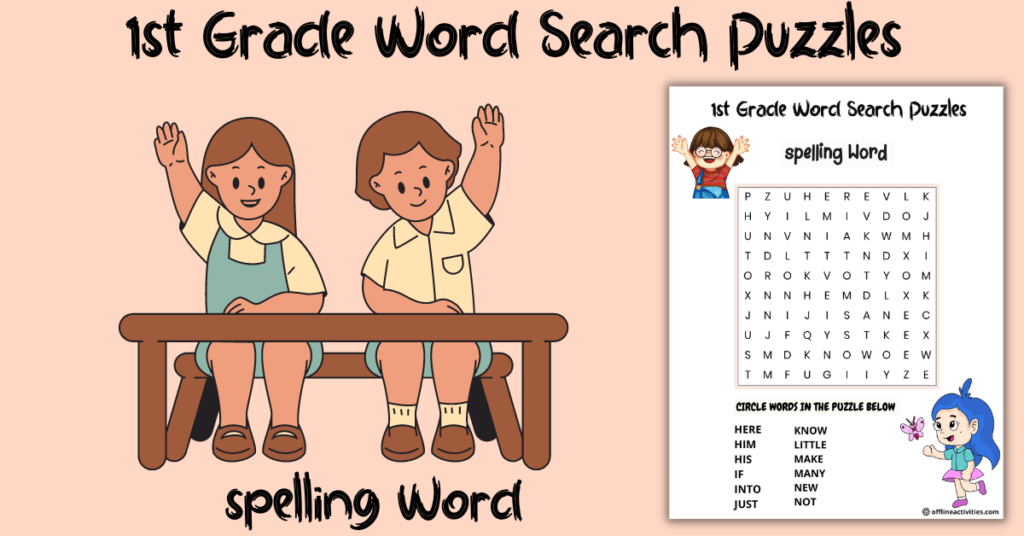
1st Grade Word Search Puzzles- spelling Word
1st Grade Word Search Puzzles- First Grade Words

1st Grade Word Search Puzzles- spelling Word