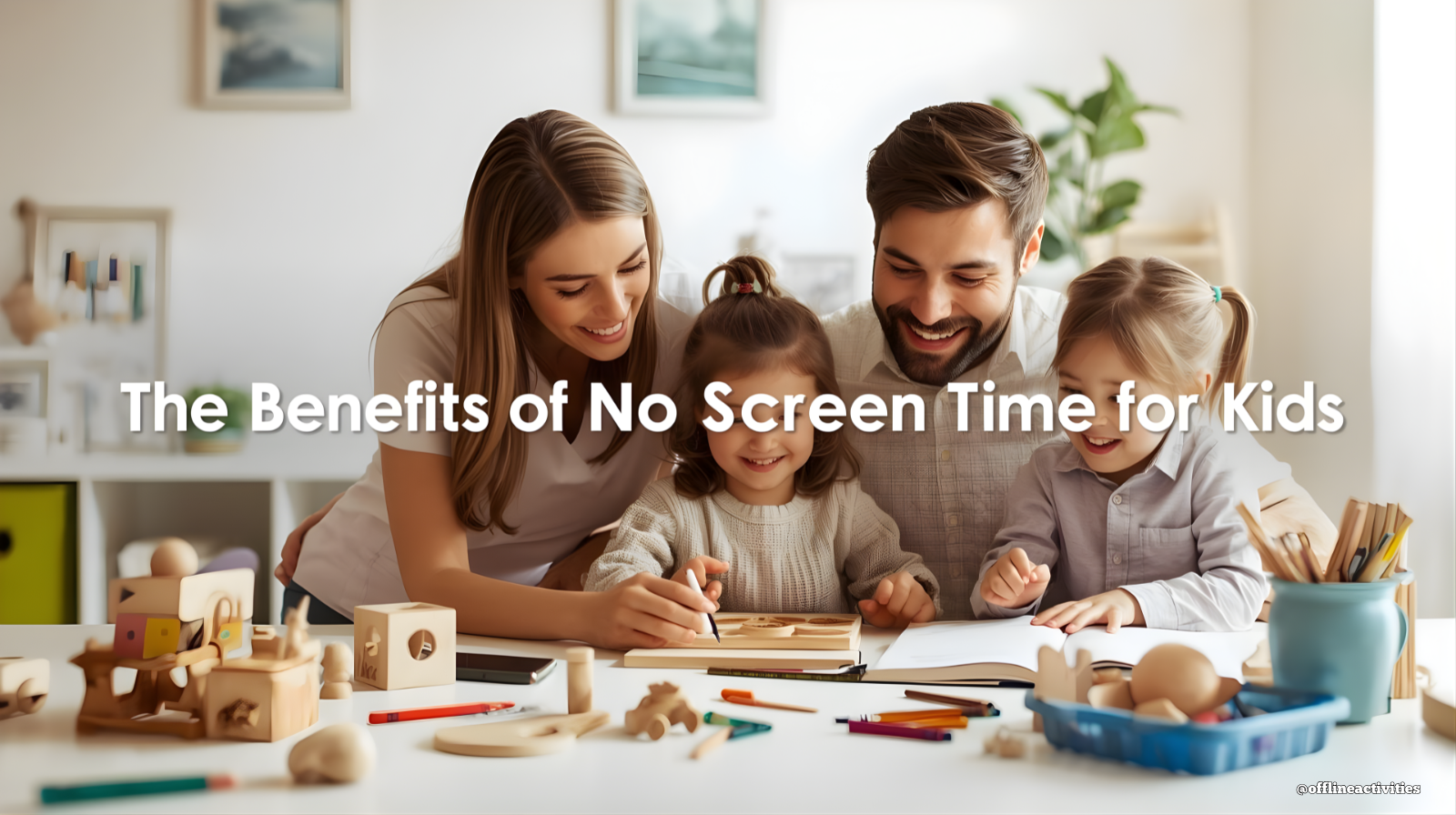
Most parents do not need convincing that kids spend too much time on screens. What they want to know is what actually changes when screen time goes down. Here are the benefits that matter most in daily life, what the research says, and how to get there without a daily battle.
A quick note on the evidence: studies on screen time mostly show associations, not proof of cause and effect, and the content of what kids watch matters as well as the minutes. That said, the pattern is consistent enough that the World Health Organization and the American Academy of Pediatrics both recommend limits for young children and a family media plan for older ones.
The Main Benefits of Less Screen Time
1. Better sleep
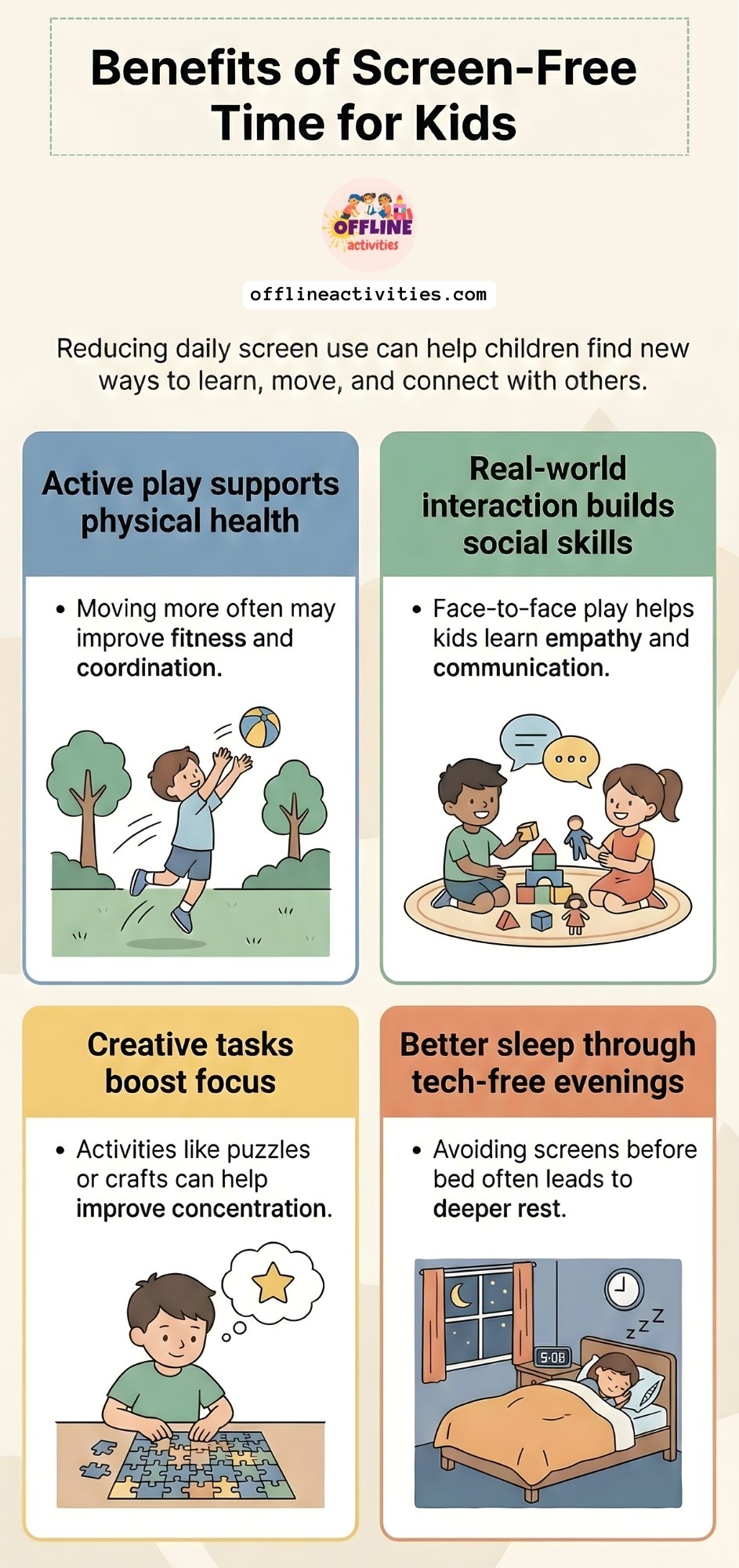
Screens in the hour before bed make it harder for many children to wind down, and exciting content keeps their minds busy. Swapping the evening show for a book, a puzzle or drawing is one of the easiest changes to make, and parents often notice results within a week or two. A well-rested child is usually easier to be around the next day, too.
2. More movement
Time on a screen is almost always time sitting down. When the tablet is off, kids run, climb, build and invent games, which supports fitness, coordination and a healthy weight. Even indoor play, like an obstacle course made of cushions, counts.
3. Stronger focus
Fast-moving apps and videos reward quick switching. Offline tasks, such as a jigsaw, a craft or a word search, ask a child to stay with one thing and finish it. That is a skill, and it grows with practice. Expect a short adjustment period at the start, because the first few days off screens can feel boring to a child used to constant stimulation.
4. Creativity and imagination
A screen supplies the story and the pictures. A cardboard box supplies nothing, so the child has to. Open-ended play like drawing, building and pretending is where kids practice inventing ideas from scratch. See our guide on encouraging creative drawing for simple ways to start.
5. Social and emotional skills
Face-to-face play teaches things that are hard to learn from a device: reading facial expressions, taking turns, losing a game gracefully, settling a disagreement. Board games, group projects and playdates give kids repeated chances to practice. Quiet, screen-free time also helps children learn to handle boredom and big feelings without reaching for a distraction.
6. Fine motor skills and learning
Holding a pencil, cutting with scissors and molding clay strengthen the small muscles children need for writing. Read more in the role of crafts in motor skills and focus and the benefits of coloring pages.
7. Closer family time
Meals, car rides and evenings without devices leave room for conversation, cooking together or a game after dinner. These ordinary moments are often what kids remember most.
Screen-Free Play vs Digital Play
| Activity type | Main benefit | Screen use | Parent involvement |
|---|---|---|---|
| Digital games | Entertainment, some quick-reaction practice | High | Low |
| Streaming videos | Mostly passive; quality varies a lot | High | Very low |
| Free play and pretend | Creativity, emotional growth | None | Optional |
| Outdoor games | Physical health, social skills | None | Moderate |
| Crafts and puzzles | Focus and fine motor skills | None | Low to moderate |
Practical Ways to Reduce Screen Time
- Agree on simple rules. Decide when and where screens are used (for example, not at meals and not in the bedroom), and keep it the same every day.
- Offer something better first. Do not just take the device away. Put out an activity before the usual screen moment, like a printable puzzle on the table after school.
- Go first. Children copy what they see. If you put your phone down during dinner, they are more likely to do the same.
- Make tech-free zones. The dinner table and the bedroom are easy places to start.
- Use screens on purpose. A video call with grandparents or an educational program you watch together is different from endless scrolling. Parental controls help, but conversation about why the rules exist works better in the long run.
- Plan family activities. A weekly game night, a walk or a baking session gives everyone something to look forward to.
Need ideas by age? Try our lists of screen-free activities for 2 year olds, 7 year olds and 10 year olds, or how to motivate kids to learn offline.
Frequently Asked Questions
How much screen time is healthy?
The WHO advises no screen time for babies under one and no more than one hour a day for ages two to four, with less being better. The AAP does not set a single number for older children and instead suggests consistent limits and a family media plan that protects sleep, play and homework. Check the current guidance from your own pediatrician or health authority.
How can I gently reduce my child’s screen time?
Cut back gradually, for example by removing one screen session a day, and replace it with a specific activity rather than an open gap. Announce changes ahead of time so they do not come as a surprise.
What can my child do after school instead of watching TV?
Offer a snack, some outdoor time to burn off energy, and then a quiet activity such as drawing, a puzzle, reading or building. A set routine helps kids know what to expect.
My child gets bored without screens. What should I do?
That is normal at first. Boredom is often the step right before a child invents something. Keep a box of materials in sight (paper, markers, clay, blocks, a deck of cards) and resist the urge to fill every quiet moment yourself.
Can screen-free play improve my child’s focus?
Hands-on tasks give children practice staying with one activity until it is done, and that practice tends to carry over to homework and reading. Results vary from child to child, and consistency matters more than any one activity.
Do I need to remove screens completely?
No. The goal is balance: screens used on purpose and in moderation, without replacing sleep, movement, reading and time with other people.
Conclusion
You do not have to overhaul your home in a weekend. Pick one routine, like screen-free evenings or tech-free meals, and give it two weeks. Better sleep, more play and calmer afternoons are usually the first things families notice. For printable help, browse our free word search puzzles and animal word searches.
YOU MAY ALSO LIKE
How Printable Games Help Kids Learn Without Screens
How to Motivate Kids to Learn Offline?
The Role Of Crafts In Developing Motor Skills And Focus