

The Benefits of No Screen Time for Kids: A Deep Dive
In today’s digital world, screen time has become a significant part of children’s daily lives. While technology offers educational tools and entertainment, cutting down on screen time can bring remarkable benefits for kids. Embracing no screen time can lead to improved physical, social, and cognitive development.
Audio guide explaining the benefits of no screen time for kids and how screen-free activities support healthy child development.
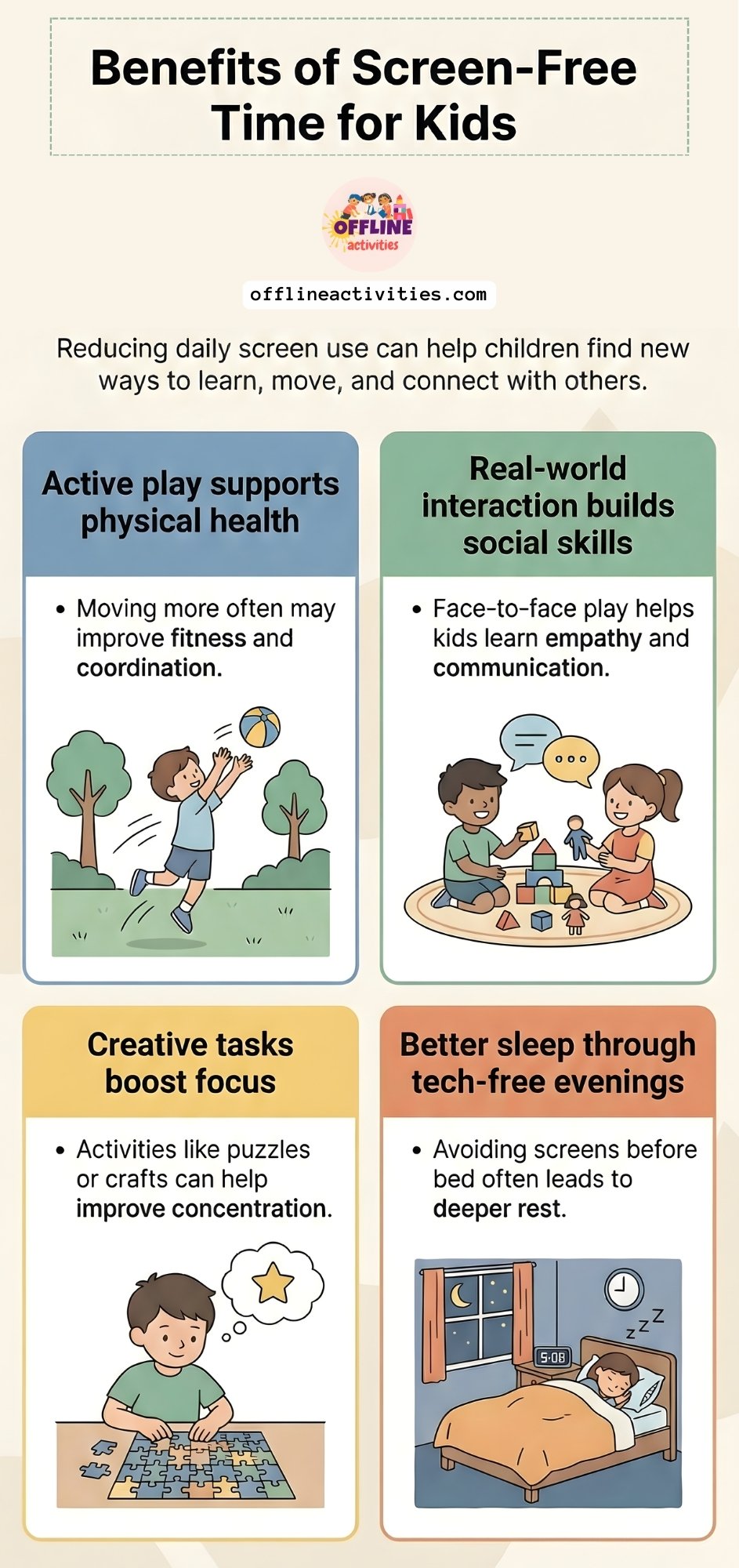
The Improvement of Physical Health
One of the most significant advantages of reduced screen time is better physical health. When kids engage in no screen activities, they are more likely to participate in outdoor play and physical exercise. This helps in:
- Enhancing Physical Fitness: Active play promotes cardiovascular health and strengthens muscles.
- Combating Obesity: Less time in front of screens leads to less snacking, which can help maintain a healthy weight.
- Improving Sleep: Less exposure to screens before bedtime helps children sleep better and longer.
Boosting Social Skills
No screen time encourages children to interact face-to-face with their peers and family members. This personal interaction is crucial for developing essential social skills, including:
- Effective Communication: Engaging in conversation helps children learn how to express their thoughts and feelings.
- Conflict Resolution: Real-world interactions teach kids how to handle disagreements and negotiate with others.
- Empathy Development: Playing with others fosters empathy as children learn to understand different perspectives.
Enhancing Cognitive Development
Children’s brains thrive on active engagement and exploration. By eliminating screen time, kids have the chance to delve into activities that stimulate their minds. The cognitive benefits include:
- Encouragement of Imagination: Without screens, children can engage in imaginative play, fostering creativity.
- Critical Thinking Skills: Engaging in games and puzzles enhances problem-solving abilities.
- Improved Focus and Attention: Engage in hands-on tasks helps improve concentration and reduces distractions.
Fostering Better Relationships
No screen time leads to stronger bonds among family members. When children spend less time with devices, families can:
- Enjoy Quality Family Time: Participate in board games, cooking, or outdoor activities together.
- Strengthen Parent-Child Connections: Engaging in discussions and shared activities fosters a deeper understanding and love.
- Create Lasting Memories: Experiences without screens can be more impactful and memorable for children.
Encouraging Healthy Hobbies
When children are not glued to screens, they have the opportunity to explore various hobbies that can enrich their lives. Some positives include:
- Developing Lifelong Skills: Activities like painting, cooking, or learning an instrument foster valuable skills.
- Increased Reading Interest: With fewer distractions, kids may turn to books, enhancing literacy and imagination.
- Improved Emotional Regulation: Engaging in hobbies provides a healthy outlet for emotions and stress relief.
Strengthening Mindfulness
Reducing screen time creates opportunities for mindfulness—a crucial skill for emotional and mental well-being. Kids can achieve mindfulness through:
- Nature Exploration: Spending time outdoors encourages an appreciation for nature and aids relaxation.
- Meditation and Yoga: Engaging in mindfulness activities can improve emotional regulation and concentration.
- Quiet Reflection: Without screens, kids can learn to enjoy quiet moments, reducing anxiety and stress.
The benefits of no screen time for kids are extensive, paving the way for healthier, happier, and more well-rounded children. By facilitating physical activity, social interaction, cognitive growth, and emotional intelligence, parents can provide their children with a solid foundation for lifelong success and well-being.
How No Screen Time Can Improve Children’s Social Skills
In today’s digital age, children are increasingly spending time on screens, whether it’s watching cartoons, playing video games, or scrolling through social media. While technology can have its benefits, there is a growing concern among parents and educators about the impact of excessive screen time on children’s social skills. By reducing screen time, you can greatly enhance your child’s ability to interact with others, understand social cues, and develop meaningful relationships.
When children engage in face-to-face interactions rather than being glued to a screen, they learn essential communication skills. They pick up on nonverbal cues like body language, facial expressions, and tone of voice. These subtle signals are crucial for effective communication. Children who spend more time with peers or family members are better at recognizing how their words and actions affect those around them. This understanding fosters empathy, a key component of social skills.
Reduced screen time also provides more opportunities for children to participate in group activities and playdates. During these interactions, they learn to share, cooperate, and resolve conflicts. For instance, while playing a board game, kids must learn to take turns and deal with winning or losing gracefully. These experiences are vital for their emotional growth and help them navigate social situations more confidently.
Here are some specific benefits of no screen time for kids:
- Enhanced Communication: Engaging in conversations face-to-face improves language skills and articulation. Children become better at expressing their thoughts and feelings when they can see how others respond.
- Improved Empathy: Direct interactions help children develop empathy. They can understand and appreciate others’ emotions, which is essential for building friendships.
- Conflict Resolution Skills: Spending time with peers helps kids learn to resolve disagreements effectively. This skill is invaluable in personal and academic settings.
- Stronger Relationships: Interactions without screens deepen bonds between friends and family. Authentic connections are built through shared experiences and open communication.
- Better Listening Skills: Being present with others encourages active listening. Kids learn to focus on what’s being said, which improves their ability to retain information.
Furthermore, reducing screen time encourages children to engage in more creative play. Activities such as building with blocks, drawing, or playing pretend stimulate their imagination and problem-solving skills. Creative play often involves collaboration, allowing children to work together toward a common goal. This collaboration can enhance teamwork skills, making it easier for children to adapt to different social settings.
Parents can encourage social interactions by planning activities that bring kids together. Organizing playdates, sports, or art classes gives children a chance to interact without the influence of screens. These activities are not only fun but crucial for their development. Make it a point to balance technology with these enriching experiences, promoting a healthy lifestyle that emphasizes social well-being.
Limit screen time by setting specific boundaries. For example, you can establish “screen-free zones” at home, particularly during meal times or before bedtime. Reinforcing these boundaries helps children see the value in engaging with family members and friends instead of devices. You can also offer interesting alternatives, like reading together or playing outside. These activities can help kids develop their social skills without relying on screens.
Moreover, the benefits of no screen time extend beyond the immediate social interactions. Children who engage in activities like sports or clubs often develop life skills such as leadership, teamwork, and even resilience. These qualities are best learned through real-world experiences rather than through a screen. The interplay of communication, emotion, and collaboration found in these environments is unparalleled.
Encouraging a lifestyle with minimal screen time empowers kids to navigate the social world with confidence. They become well-rounded individuals who can connect with others on a deeper level. The skills they build during this screen-free time will serve them well in their future academic and professional lives, where teamwork and interaction are increasingly important.
Prioritizing no screen time for kids is a powerful way to promote their social skills. By fostering environments where face-to-face interactions thrive, parents can help their children become empathetic, cooperative, and confident individuals. Maintaining this balance will ultimately lead to healthier relationships and a more enriching childhood experience.
The Impact of Reduced Screen Time on Child Development
The modern world is saturated with screens—from smartphones to tablets and TVs. As children grow up in this digital age, it’s vital to examine how reduced screen time can positively influence their development. Lowering screen exposure can lead to several benefits that are crucial for a child’s growth and well-being. Here, we explore these advantages in detail.
Enhancing Physical Health
One of the most immediate benefits of reducing screen time is improved physical health. Children who spend less time in front of screens tend to engage more in physical activities. This can lead to:
- Better cardiovascular fitness
- Improved muscle strength and endurance
- Healthier body weight and reduced obesity risks
When kids play outside, they not only burn calories but also develop essential motor skills. Activities like climbing, running, and jumping enhance their coordination and balance.
Boosting Mental Well-Being
Less screen time can significantly enhance a child’s mental health. Studies indicate that excessive screen use is linked to increased anxiety and depression rates in children. By minimizing screen time, parents can promote a more balanced emotional state. Some of the mental health benefits include:
- Lowered stress levels
- Improved mood and emotional regulation
- Greater self-esteem through offline social interactions
Engaging in outdoor play and hobbies instead of passive screen viewing allows children to connect better with their peers, fostering friendships and emotional resilience.
Fostering Creativity and Imagination
Reduced screen time encourages children to explore their creativity. Without the constant stimulation from screens, kids are more likely to engage in imaginative play. This has a profound impact on their cognitive development, leading to:
- Enhanced problem-solving skills
- Greater ability to think critically
- Improved innovation in playtime activities
When children are left to their imagination, they are often more resourceful and inventive, whether they’re building a fort out of couch cushions or drawing a masterpiece.
Improving Social Skills
Social interactions are critical for child development, and reducing screen time can encourage children to engage more face-to-face with their peers. This leads to:
- Better communication skills
- Improved ability to read social cues
- Increased empathy as children interact in different contexts
Social playgroups, sports activities, and family gatherings can all become more beneficial when kids are not preoccupied with screens. They learn to navigate social situations, developing skills that will serve them throughout their lives.
Enhancing Learning and Cognitive Skills
Excessive screen time can hinder a child’s ability to focus and engage with learning materials. Reducing screen exposure can enhance their attention span and overall academic performance. Benefits for cognitive skills include:
- Better concentration on tasks
- Improved memory retention
- Greater motivation to read and learn independently
Encouraging children to engage in reading, arts, and hands-on activities reduces distractions, allowing them to fully immerse themselves in learning experiences.
Promoting Better Sleep Patterns
Screen time, especially before bedtime, can interfere with sleep quality. Blue light emitted from screens hinders the production of melatonin, the hormone responsible for sleep. Benefits of reducing screen time for better sleep include:
- Easier time falling asleep
- Better quality of sleep
- Increased energy levels during the day
Establishing a calming bedtime routine without screens can help children recharge healthily, promoting overall well-being.
The positive impact of reduced screen time on child development is undeniable. From enhancing physical health to improving mental well-being and cognitive skills, the advantages are numerous. Implementing structured routines that prioritize offline activities can lead to happier, healthier, and more engaged children. With the right balance, you can help your child thrive in both their personal and academic lives.
Screen-Free Play vs Digital Play: Comparison Table
| Activity Type | Benefits | Screen Use Level | Parent Involvement |
|---|---|---|---|
| Digital Games | Entertainment only | High | Low |
| Streaming Videos | Passive learning | High | Very low |
| Screen-Free Play | Cognitive + emotional growth, creativity | None | Active |
| Outdoor Games | Physical health, social skills | None | Moderate |
| Crafts & Puzzles | Focus and fine motor skills | None | Low–Moderate |
Creative Alternatives to Screen Time for Engaging Kids
Finding engaging activities for kids that don’t involve screens can be a rewarding challenge. Limiting screen time doesn’t mean that children will be bored or miss out on fun. In fact, there are countless creative alternatives that can stimulate their minds, enhance their creativity, and promote physical health. Here’s a look into various engaging activities that serve as excellent substitutes for screen time.
One of the most accessible options is outdoor play. Nature can be an exciting playground for kids. They can climb trees, run in open fields, or create their own games. Here are a few outdoor activities that can be highly engaging:
- Scavenger Hunts: Organize a scavenger hunt in your backyard or local park. Create a list of items for your kids to find, such as specific leaves, rocks, or flowers. This activity boosts observation skills and encourages teamwork.
- Sports Activities: Playing soccer, basketball, or even riding bicycles can provide both exercise and fun. These activities help develop teamwork, coordination, and physical fitness.
- Gardening: Involve your children in gardening by allowing them to plant flowers or vegetables. This activity teaches responsibility and patience as they watch their plants grow over time.
Indoor activities can also be a great alternative to screen time. Here are creative ways to keep children engaged indoors:
- Arts and Crafts: Encourage creativity by providing materials for arts and crafts. From painting to making friendship bracelets, the options are endless. This allows for self-expression and develops fine motor skills.
- Cooking Together: Invite your children into the kitchen to help prepare meals. Cooking can be a fun and educational experience where they learn about measurements, following directions, and nutrition.
- Puppet Shows: Use socks, paper bags, or even toys to create puppets. Kids can then write their own scripts and put on a puppet show, which enhances storytelling skills and imaginative play.
Reading is an invaluable activity that fosters a love for stories and information. Here are some engaging ways to incorporate reading:
- Storytime: Set aside time each day for reading together. Choose a cozy spot and explore different genres. Kids can even take turns reading aloud, which helps build confidence and improves their reading skills.
- Library Visits: Regular trips to the library can be exciting adventures. Let your children explore various books, attend storytime sessions, or participate in fun reading programs that many libraries host.
Another fun way to connect with your kids is through games and puzzles. Board games, card games, and puzzles can create bonding moments while also encouraging strategic thinking and patience. Here are a few ideas:
- Board Games: Choose games that are age-appropriate and foster critical thinking. Games such as Scrabble, Monopoly, or chess can be quite engaging and provide ample opportunities for laughter and learning.
- Building Challenges: Use building blocks or Lego sets to create structures. Set challenges for your kids, such as building the tallest tower, which encourages problem-solving and creativity.
Active play with friends is another vital aspect of engaging children. Arranging playdates or joining community sports teams can help enhance their social skills and build friendships. These interactions are crucial for developing emotional intelligence and teamwork.
Don’t overlook the power of imagination. Allow your children to engage in play that encourages imaginative scenarios such as:
- Dress-Up Games: Supply a box of costumes or hats. Let them transform into their favorite characters and create their own narratives.
- Role-Playing: Encourage your children to role-play various occupations or historical figures. This can spark their interest in learning and exploring different roles in society.
There are countless creative alternatives to screen time for engaging kids. These activities promote learning, develop vital skills, and foster emotional connections. By encouraging a variety of engaging pursuits, you ensure that your children remain active, creative, and socially skilled without relying on screens for their entertainment.
Tips for Parents to Manage and Limit Screen Time Effectively
In today’s digital age, managing screen time for children can feel overwhelming. However, with the right strategies, you can effectively limit screen use while ensuring your child remains engaged and active. Here are some actionable tips to help you create a healthy balance between screen time and other activities.
Set Clear Rules and Guidelines
Establishing specific rules about screen time helps children understand expectations. Consider the following:
- Decide how much screen time is appropriate each day based on your child’s age.
- Designate specific days or hours for device use to build a routine.
- Clearly communicate why these rules are in place, focusing on health and family time.
Encourage Alternative Activities
To help reduce screen time, introduce engaging alternatives. These activities can promote creativity and physical activity:
- Reading: Set a daily reading goal, and even join in to make it a family ritual.
- Outdoor Play: Encourage your children to play outside, whether it’s riding a bike or visiting a local park.
- Art and Crafts: Provide supplies for drawing, painting, or crafting, which can be both fun and educational.
Lead by Example
Your behavior significantly influences your child’s habits. If you want your children to reduce their own screen time, practice what you preach. Here’s how:
- Limit your own screen time, especially during family meals and gatherings.
- Engage in activities together that do not involve screens, showcasing the joy of offline fun.
- Share your reasons for limiting screen use, helping your child understand its importance.
Create Tech-Free Zones
Designate areas in your home where screens are not allowed. This encourages interaction and creates a peaceful environment. Good places for tech-free zones include:
- The dining room, promoting family meals without distractions.
- Your child’s bedroom, ensuring they have a space dedicated to rest and relaxation.
- The playroom, encouraging imaginative play without the influence of screens.
Use Parental Controls Wisely
Modern devices often come equipped with parental controls to help monitor and limit screen time. Use these tools to your advantage:
- Set daily limits on device usage for specific apps or games.
- Utilize features that restrict access to certain types of content.
- Regularly review and adjust settings based on your child’s maturity and understanding of screen-time rules.
Discuss Online Safety and Responsibility
As children’s screen time increases, it’s essential to educate them about online safety. Talk with your child about:
- The importance of not sharing personal information online.
- Recognizing safe and appropriate content.
- The potential risks of engaging with strangers on the internet.
Incorporate Family Activities
Make family bonding time a priority to naturally reduce screen time. Plan weekly family activities that everyone can enjoy:
- Game nights can turn screen time into quality time when board games are involved.
- Cooking together can teach healthy eating habits and be a fun way to engage.
- Family outings, like hikes or visiting museums, foster deeper connections and promote physical activity.
By implementing these strategies, you can create a healthier environment for your children. Balancing screen time with other stimulating activities is beneficial for their overall development. In this way, children can enjoy the benefits of technology while also reaping the rewards of active and engaged lives away from the screen.
Frequently Asked Questions
How can I gently reduce my child’s screen time?
Start with one small daily change, like replacing 30 minutes of screen time with a puzzle or outdoor play. Explain the “why” kindly.
What are good alternatives to TV after school?
Outdoor play, coloring pages, reading time, simple board games, LEGO building, or snack + creative time.
Can screen-free play improve my child’s focus?
Yes. Completing puzzles, crafts, and imaginative play strengthens attention over time.
How much screen time is healthy?
Under 2: avoid screens except video calls.
Ages 2–5: about 1 hour of high-quality content.
Ages 6+: consistent limits with priority on sleep, movement, and family time.
What activities best build family connection?
Game nights, reading rituals, nature walks, cooking together, craft projects.
My child gets bored without screens. What should I do?
Boredom is a starting point for imagination. Offer simple choices instead of instant entertainment.
Do I need to eliminate screens completely?
Not at all. Even replacing one hour per day with creative offline play makes a big difference.
Conclusion
Embracing a life with no screen time can unlock a world of benefits for children. By limiting screens, you’re not only promoting healthier lifestyles but also cultivating essential social skills. Kids engage more with their peers when they interact face-to-face, leading to stronger friendships and improved communication abilities. The impact on child development is significant, as less screen time encourages more active play, creativity, and cognitive growth.
Exploring creative alternatives can keep children engaged in exciting activities without screens. From outdoor adventures to arts and crafts, these options stimulate their imaginations and foster a sense of discovery. When you provide diverse, engaging experiences, children thrive in a more balanced environment.
For parents, managing and limiting screen time doesn’t have to be daunting. By setting clear boundaries and leading by example, you can create a family culture that values real-life interactions over digital distractions. Tools like screen time schedules or tech-free zones can help reinforce these practices.
Choosing to minimize screen time is an investment in your child’s future. By encouraging interactions, creativity, and personal growth, you’re helping to shape a generation equipped with the skills needed to succeed in life. So, dive into this screen-free adventure; the benefits for your children can be countless and rewarding!
YOU MAY ALSO LIKE
How Printable Games Help Kids Learn Without Screens
Screen Free Activities For 2 Year Olds
How to Motivate Kids to Learn Offline?
The Role Of Crafts In Developing Motor Skills And Focus